Sunday, February 8, 2015

Plainsong

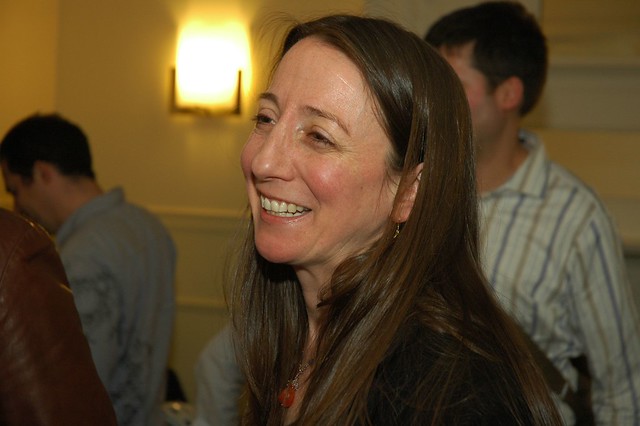
[photo by Tova Olivia Pappas]
Plainsong

The penny dropped
falls to silence
where I remain for a long time
copper greening
at the bottom of an empty vase.
What fits me alone?
What to claim?
What to carry into wilderness —
a cliff, a ridge, a blind corner
antler splinted,
foxes at low windows,
pantry gutted by sly invaders.
Disturbed cats
flee to high places.
Feral we pace, unceasing
noon, dusk, dawn
blunder makes a music play —
riotous dance.
Owls & night-coiled snakes
outside the cracked glass
stare.

Sunday, February 1, 2015

Susan Howe

[Prufrock's Dilemma]

from Susan Howe's The Midnight:

Ten thousandth truth

Ten thousandth impulse
Do not mince matter
as if tumbling were pat
parable preached in
hedge-sparrow gospel
For the lily welcomes
Owl! art thou mad?
Why dost thou twit me
with foreknowledge

To this the Nihtegale
gave answer that twig
of thine thou shouldst
sing another tune Owl
Still in Ovid cloth of
scarlet the Owl and her
"Old Side" blue thread
Listen! Let me speak!
the Wren replied I do
not want lawlessness . . .

Evening for the Owl
spoke wisely and well
willing to suffer them
and come flying night
from the Carolingian
mid owl falcon fable
In their company saw
all things clearly wel
Unfele I could not do

Nihtegale to the taunt
Owl a preost be piping
Overgo al soke iseon
sede warme inome nv
still one bare word
Go he started mid ivi
Grene al never ne nede
Song long ago al so
sumere chorless awey

Friday, January 30, 2015

Thomas Watson


from Thomas Watson’s Hecatompathia:

Passion XL

I joy not peace, where yet no war is found;
I fear, and hope; I burn, yet freeze withal;
I mount to heav’n, yet lie but on the ground;
I compass nought, and yet I compass all:
  I live her bond, which neither is my foe,
  Nor friend; nor holds me fast, nor lets me go;
Love will not that I live, nor lets me die;
Nor locks me fast, nor suffers me to scape;
I want both eyes and tongue, yet see and cry;
I wish for death, yet after help I gape;
  I hate myself, but love another wight;
  And feed on grief, in lieu of sweet delight;
At selfsame time I both lament and joy;
I still am pleas’d, and yet displeased still;
Love sometimes seems a God, sometimes a Boy;
Sometimes I sink, sometimes I swim at will;
  Twixt death and life, small difference I make;
  All this dear Dame befalls me for thy sake.

H. D.

H. D. [Poetry Foundation]

from H. D.'s Asphodel:

The world's good word, the institute, — that's the Institut de France. The Institute. Carl and Bertrand Gart getting books, pamphlets from the Institute, French Binomial Theorems. Mathematics is a language common to all people — dots and dashes — why don't we all speak a common language of dots and dashes and colours? Why must we be divided, hating each other, never understanding? There ought to be a sort of Spiritual Esperanto, all understanding each other but then how tiresome because French things are French. French things are more French obviously than anything American could ever be American. What is American? That's just it. Asking us to be something that has never yet been defined. I am a Frenchman. O yes then go die for it, for that visible, embodied thing you call la patrie. La patrie is visible. It has made those peonies on that cart shine with that luminous rose in alabaster light. France. France has made those peonies different from any other and our flowers at home were always Dutch tulips, English roses, O la France rose had to have a name, a tag to get really across to us, to make us really love it. The Seine. This is the Seine. Fancy calling the little built up island the Ile de France. Of France. Of all of France. The island of France. Islands. The island in the river where we had picnics, called Calypso's island and I asked my dear old Bert who Calypso was and he said a goddess out of a Greek poem. That was the first time I had ever heard of a goddess. "Who was she? What is one?" "What is what, Bird?" (They call me Bird.) "Why that, what you said, something about less God." "O ho, ho." Bert didn't laugh like that but how do you think of people when they laugh? It's a sort of cringing, a sort of crinkling, a sort of twisting. It's letting go. Bert let go, leaned against the rail of the bridge. (We were on our way up what we called, the mountains, for what we called, pansy violets.) O ho, ho. That is no sound for laughter. But how write laughter? Bertrand laughed. He was always immensely thin, immensely tall. Laughing. "How kind of your big brother to take you, such a little girl up the mountains." "Yes to get pansy violets." Bert laughing. "A goddess as a — god — less, a God — less. Less what, Birdlet?" "It was you who said it, not me. I didn't say anything about any less." "You did, oracle. You said a goddess —" And he was at it again. Twisting a long leg around another long leg. What was he about then. But here we are, not there. Here we are standing on a bridge over the Seine, the galleries of the Louvre to the left ladies and gentlemen and the famous Notre Dame across a little in the distance. Here we are in France. How ever did we get here? What is France? What is French? A sort of (obviously) Esperanto of the Spirit.

Monday, January 26, 2015

Of Shine


Of Shine

The heron’s bill grasps
one end of shine

frog or fish or snake
a slap at morning-misted air.

Down the hawk plunges
talons bent to steal

the prey precipitous gone
to gullet or ground.

Four great wings batter
hoist & haul away.

Claudia Rankine

Claudia Rankine [StarTribune]

from Claudia Rankine's Citizen:

You like to think memory goes far back though remembering was never recommended. Forget all that, the world says. The world’s had a lot of practice. No one should adhere to the facts that contribute to narrative, the facts that create lives. To your mind, feelings are what create a person, something unwilling, something wild vandalizing whatever the skull holds. Those sensations form a someone. The headaches begin then. Don’t wear sunglasses in the house, the world says, though they soothe, soothe sight, soothe you.

The head’s ache evaporates into a state of numbness, a cave of sighs. Over the years you lose the melodrama of seeing yourself as a patient. The sighing ceases; the headaches remain. The sighing ceases; the headaches remain. You hold your head in your hands. You sit still. Rarely do you lie down. You ask yourself, how can I help you? A glass of water? Sunglasses? . . .

The world is wrong. You can’t put the past behind you. It’s buried in you; it’s turned your flesh into its own cupboard. Not everything remembered is useful but it all comes from the world to be stored in you. Who did what to whom on which day? Who said that? She said what? What did he just do? Did she really just say that? He said what? What did she do? Did I hear what I think I heard? Did that just come out of my mouth, his mouth, your mouth? Do you remember when you sighed? . . .

Feel good. Feel better. Move forward. Let it go. Come on. Come on. Come on. In due time the ball is going back and forth over the net.

Sunday, January 25, 2015

Hayden Carruth

Hayden Carruth [syracuse.com]

from Hayden Carruth’s Selected Essays:

without doubt much of the best poetry in our century, especially in America, has been composed according to notions of free metric. Pound was the master. He kept the measure — often in the Cantos a four-stress line — he kept alive our anticipation of the beat, he was always aware of line values, very keenly aware; yet by using every device of phrasing, including rests and stops, he also kept alive our sense of the spontaneity and natural harmony of poetic language, never forced, never imprecise. His influence is pervasive. It seems to me that the three closest followers of Charles Olson — Denise Levertov, Robert Creeley, and Robert Duncan — come nearer to Pound in the metrical practices I have just described than they do to Olson or Williams himself. . . .


Not long ago when I was reading Whitman with some graduate students, we all agreed that we were too inhibited vocally to chant the poems as Whitman himself doubtless did. Our grandparents and great-grandparents were taught to read poetry as poetry. No doubt many excesses were committed — gestures, declamatory extravagance, etc. — but why did we throw out the baby with the bath water? Now we are afraid to read even our own finicky poems for the vocal acuities they might possibly contain. Our voices are atrophied, no tension in them, no resonance or timbre. . . .

the “power to reason” means the “will to dominate.” Intelligence is the perversion of instinct. We cannot use it, but we must somehow, by force of self-denial or power of self-transcendence, bring it into consonance with the superiority of non-intelligence.


Saturday, January 24, 2015

John Balaban

John Balaban [YouTube]

For the Missing in Action

Hazed with harvest dust and heat
the air swam with flying husks
as men whacked rice sheaves into bins
and all across the sunstruck fields
red flags hung from bamboo poles.
Beyond the last treeline on the horizon
beyond the coconut palms and eucalyptus
out in the moon zone puckered by bombs
the dead earth where no one ventures,
the boys found it, foolish boys
riding their buffaloes in craterlands
where at night bombs thump and ghosts howl.
A green patch on the raw earth.
And now they've led the farmers here,
the kerchiefed women in baggy pants,
the men with sickles and flails, children
herding ducks with switches--all
staring from a crater berm; silent:
In that dead place the weeds had formed a man
where someone died and fertilized the earth, with flesh
and blood, with tears, with longing for loved ones.
No scrap remained; not even a buckle
survived the monsoons, just a green creature,
a viny man, supine, with posies for eyes,
butterflies for buttons, a lily for a tongue.
Now when huddled asleep together
the farmers hear a rustly footfall
as the leaf-man rises and stumbles to them.


Saturday, January 17, 2015

Andrew Grace

Andrew Grace [Shenandoah]


Grant Wood, oil on hardboard, 1934

1.

Noon. A thresher waits
to wash the debris from his face into
a stone bowl. His hair is stiff
with lice. A rooster
missed its hour, tries
to scream the sun back down; it is Iowa,
1892. A draft horse the color
of zinc tongues it own shadow.
The thresher is about to join a table
of men — fourteen of them, as in the Last Supper —
in the house
for lunch. The string of Xs
formed by the backs of the men’s overalls marks a negation.
They lift the offering to their
mouths: blood, flesh;
coffee, rabbit.

2.

Their minds are on process:
thrash, shake, winnow. Two thousand
bushels bagged in a pigeon-crusted loft.
Two thousand to go.
Man in the hopper,
man on the stack of moth-gutted
wheat. Two horses lashed to the ends
of a rafter, the drugged circumference
of their labor turns the machine.
The man in the hopper
pushes wheat into a chute, which separates
grain from chaff. A boy clears the waste.
A shroud of white moths rises
from his arms.

3.

The thresher’s forehead is the color of torn roots, his face
and neck empurpled by sun, spelled only by quick
reshufflings of cirrus.
He is not
unhappy, only
afflicted by variables. Hail, rust,
blight, eyespot,
black chaff,
pink seed, flood, endless depth of sky, endless dark of his bedroom
in which the eye drowns.

4.

Ornate wallpaper, the smell of cooked meat
like the flush of warmth back
to a cold extremity:
women bring bowls
to the table, men in
fellowship with men as a reward for labor.
But for every spotless rack
of cerulean china
there is a night
when the rooster
conjures a false dawn;
in its intervals
silence rages in the English garden;
candle flames like commas
prolong the dark. This is why
aprons are bleached daily,
why the barn is scrubbed as reclamation from
scat and sun, why
each man asks for more meat, more labor
as if bodies
are made to be consumed.

5.

To chew the roots of cowbane is a way out. Laudanum under
the sink is
a way out. Also, the concept
of being a metaphor
for wheat:
when torn open: raw, prone material
that broken across
a machine or a winter
is malleable to
any use; touch me and blue shale beneath
us is tamped an inch
towards the underworld.
What if they did not want
a way out? Night’s oaks swallow wrens, so dark
the barn is imperceptible. To sit at that
table emptied of its men is to
learn to take solace in what pours
from the window’s open mouth.

6.

The last man raises
his face from the bowl. The prairie
is both hurtling and
standing still. It will
not rearrange itself no
matter how deeply he scrawls his attention
over it. He takes in the thick
concussions of light.
He is drawn back to the barn
and past it, where pheasants explode
from the ditches. He is not hungry
anymore. Someone will take his seat
at the table. Someone will lower their head
and ask the Lord to be made
more bare to the sun.
A clot of moths unravels
across the man’s eyes. He asks for no other
veil over the stillness.
And the Lord
provides.

Saturday, January 10, 2015

Harryette Mullen

Reading Jayne Cortez

I’m using my plain brain to imagine her fancy cortex. As if my Lowly mollusk could wear so exalted a mantle as her pontifex Pallium. As if the knots and tangles of my twisted psyche could mesh with her intricate synaptic network of condensed neural convolutions. As if my simple chalk could fossilize the memory of her monumental reefs of caulifloral coral. As if my shallow unschooled shoals could reckon the calculus of her kink’s brainwave tsunami. As if the pedestrian software of my mundane explorer could map as rounded colonies the terra incognita of her undiscovered hemispheres. As if the speculative diagnosis of my imaging technology could chart the direction of her intuitive intellect. As if the inquisitive iris of my galaxy-orbiting telescope could see as far as her vision. As if the trained nostrils of my nacro-bloodhound could sniff out what she senses in the wind. As if my duty-free bottle of jerk sauce could simulate the fire ant picante that inflames her tongue of rage. As if the gray matter of my dim bulb could be enlightened by the brilliance of her burning watts. As if her divergent universification might fancy the microcosm of my prosaic mind.


Music for Homemade Instruments

I dug you artless, I dug you out. Did you re-do? You dug me less, art. You dug, let’s do art. You dug me, less art. Did you re-do? If I left art out, you dug. My artless dug-out. You dug, let art out. Did you re-do, dug-out canoe? Easy as a porkpie piper-led cinch. Easy as a baby bounce. Hop on pot, tin pan man. Original abstract, did you re-do it? Betting on shy cargo, strutting dimpled low-cal strumpets employ a hipster to blow up the native formica. Then divided efficiency on hairnets, flukes, faux saxons. You dug, did you re-do? Ever curtained to experiment with strumpet strutting. Now curtains to milk laboratory. Desecrated flukes & panics displayed by mute politicians all over this whirly-gig. A well known mocker of lurching unused brains, tribal & lustrous diddlysquats, Latin dimension crepe paper & muscular stacks. Curtains for perky strumpets strutting with mites in the twilight of their origami funkier papoose. Thanks for patting wood at flatland. Thanks for bamboozle flukes at Bama, my seedy medication. Thanks for my name in the yoohoo. Continental camp-out, percolating throughout this whirly-gig on faux saxon flukes. Artless, you dug. Did you re-do?


Tuesday, January 6, 2015

But we are a house


But we are a house

foundered on a hillside
bottomed in a creek & crowned
by century redwoods. We are walled
w/ eyes recording weather,
dawn, Anna's hummingbirds & silver
fungi, fox & coyote, tomato-
gobbling fawn w/ parent
(parent another kind of house).

We don’t recall the hares &
Germán’s dogs in fruitless chase,
a hundred parrots grazing
out the north window of that red-roof
pale green house, vacant now
& likely wind burned, dust bunnied,
the dying willow once hung
w/ parrots a ghost beside
a second-story stained-glass eye
incandescent w/ desire to gain
someone new’s affection.

                                          But here
in what you call present time we are
a blue-roof pale brown, say it — beige
call it bone house. Is it so unlikely
you can learn to love us?

Monday, January 5, 2015

two coyotes

coyote @ UCSC [Santa Cruz Pumas]

two coyotes cross
the driveway, eyeball the cat
disappear downslope

Sunday, January 4, 2015

Sixteen Sections


falling stars reckon
a rabbit moon kin or foe
clouds may discover

according to the 11th century Ehr-Ya Encyclopedia, tyvm Philip Whalen, the world divides into sixteen sections, i.e.:

kin,
houses, utensils,
music,
heaven, earth,
mounds, hills,
waters,
plants, trees,
insects,
fishes,
birds,
wild
& domestic animals

a cat down a well
is not a drink but a dream
of drink, a bad spill

Saturday, January 3, 2015

No Bone


No Bone

My thumb joint's becoming a natural
marshmallow, seamed at the wrist
above a neighborhood weave,
natives jockeying for best place,

muscling into a new interior
left by a bone drilled & joysticked
out of mosaic, its grout extruded
by decades of tool use or traces

of faulty DNA. Reconstruction’s a race
not to mimic the joint but conjecture
by tissues willed to regenerate,
to stuff life in the empty space.

Friday, January 2, 2015

the prisoned weight


the prisoned weight of
my thumb, wound & bound, boarded
stay at home Gitmo

Thursday, January 1, 2015

Sunday, December 21, 2014

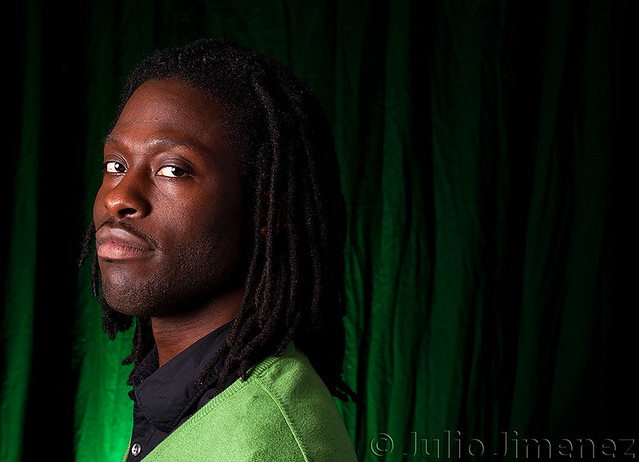
Roger Reeves

Roger Reeves [Julio Jimenez]

from Roger Reeves's King Me:

Self-Portrait as Vincent van Gogh in the Asylum at Arles

The moths in the orchard squeal
with each pass of the mistral wind.
Yet the reapers and their scythes,
out beyond the pear trees, slay wheat
in sure columns. Christ
must have been made of shocks
of wheat. When they lashed him,
four bundles of fine yellow burst forth
from each welt. And the women,
tarrying as they do now behind the swing
and chuff of the reapers' blades,
gathered and plaited the stray pieces
of wheat falling from his hips into braids,
long braids that would bind a tattered sail-
cloth over his yellow mouth, yellow feet.
Oh to be bound by one's own blood
like a burlap sack cinched around the neck
with a leather belt. Father, forgive me
for the moths shrieking in the orchard
of my mouth. Forgive the rattle and clatter
of wings inside the blur of my brain.
Even if these iron bars queer a field,
queer a woman standing too close to a reaper's blade,
a half-moon hung and wholly harsh,
even if this woman, burdened like a spine
carrying a head and a basket of rocks,
forgets the flaw of a well-sharpened tool,
let her not mistake my whimper and warning
for the honk of a goose in heat. Father,
she is not made like our savior,
of straw, of a coarse tender. Nothing will stop
when her blood runs along a furrow.
The sun will not sag with a red scowl.
The field will not refuse water, Father,
I am unsure of what I am —
a fragrant mistral wind or a pile of moth's heads
at the foot of a pear tree. Father,
give me a scythe. Father, let me decide.


Every Casket, a Pause

Leaking white into the plum-crushed tunic of night,
the geese drop their tiny anvils onto the lake,
our heads, as if your brother floating below our boat
weren't forcing enough silence into our throats.
Should I gather and burn what falls? What beast
should I press to your back and breast, let suck
at the fine ribbon of grief knotted at your neck?
I have an animal for every occasion. And another
for the occasion after. Our boat tangled in the crown
of a pine. Your hand, hacking at the needles. Too much
blood in the water. Dead Love, Dear Pine Piercing
The Top of This Flooded Lake, who will cut us down,
burn what remains, leave feathers to clot our throat?

Thursday, December 18, 2014

Susan Sontag

Susan Sontag [Architectural Digest]

from Susan Sontag's Antonin Artaud: Selected Writings:


Artaud wandered in the labyrinth of a specific type of religious sensibility, the Gnostic one. (Central to Mithraism, Manichaeism, Zoroastrianism, and Tantric Buddhism, but pushed to the heretical margins of Judaism, Christianity, and Islam, the perennial Gnostic thematics appear in the different religions in different terminologies but with certain common lines.) The leading energies of Gnosticism come from metaphysical anxiety and acute psychological distress — the sense of being abandoned, of being an alien, of being possessed by demonic powers which prey on the human spirit in a cosmos vacated by the divine. The cosmos is itself a battlefield, and each human life exhibits the conflict between the repressive, persecuting forces from without and the feverish, afflicted individual spirit seeking redemption. The demonic forces of the cosmos exist as physical matter. They also exist as “law,” taboos, prohibitions. Thus, in the Gnostic metaphors the spirit is abandoned, fallen, trapped in a body, and the individual is repressed, trapped, by being in “the world” — what we would call “society.” (It is a mark of all Gnostic thinking to polarize inner space, the psyche, and a vague outer space, “the world” or “society,” which is identified with repression — making little or no acknowledgment of the importance of the mediating levels of the various social spheres and institutions.) The self, or spirit, discovers itself in the break with “the world.” The only freedom possible is an inhuman desperate freedom. To be saved, the spirit must be taken out of its body, out of its personality, out of “the world.” And freedom requires an arduous preparation. Whoever seeks it must both accept extreme humiliation and exhibit the greatest spiritual pride. In one version, freedom entails total asceticism. In another version, it entails libertinism — practicing the art of transgression. To be free of “the world,” one must break the moral (or social) law. To transcend the body, one must pass through a period of physical debauchery and verbal blasphemy, on the principle that only when morality has been deliberately flouted is the individual capable of a radical transformation: entering into a state of grace that leaves all moral categories behind. In both versions of the exemplary Gnostic drama, someone who is saved is beyond good and evil. Founded on an exacerbation of dualisms (body-mind, matter-spirit, evil-good, dark-light), Gnosticism promises the abolition of all dualisms.

Artaud’s thought reproduces most of the Gnostic themes.

Monday, December 8, 2014

Saskia Hamilton

Saskia Hamilton [Star Black]

from Saskia Hamilton's Divide These:

Year One

If the eyes move to the right: no.
If they stay in the center: yes.

The left is for listening because they sit
on the left side of the bed.

Only the eyes move. Someone
swabs her lips.


The first nurse is too cheerful.
The second does not know

how to speak to the speechless.
The third strokes her arm:

something settles down:
one lying, one sitting,

one in the doorway.

Sunday, December 7, 2014

Remembering Dreams


A flash of green,
the face of someone mouthing words
you can’t hear or remember —
sometimes all that returns is the curve
of the plank bridge you cross, the wonder of
outstretched wings, your body
riding the air between.

Nights, you lie impatient
for sleep, for noises to jolt you awake
mid-dream — the sound of the child
rising from her bed at the foot of your bed,
staring out the window, then peering at you,
your closed eyes, making sure you’re
still here, the child not knowing
you are awake & listening.

You wait for reruns —
the dream of the lion, the snakes
surrounding the bed, the long corridors,
pitched ramps, stair steps
hollowed by boot soles
leading you higher & higher to room after room,
family & roommates, always
the old house.

You wait for the rare dreams
where your mother is alive
& going her patient way —
being a mother is learning how to wait”
she would say at the doctor’s office,
at piano lessons, & afterward waiting alone
the rest of her life for letters & calls, waiting
through the long dream of her death.

Before first light
you wait & listen, dreams gone by
except in bursts — one actor
center stage, spots blazing, grease-paint
running, her mouth round & open
she speaks into the memory
of your other world.