Tuesday, April 7, 2015

Ode to Becoming Able


Ode to Becoming Able

Told
not 
to bend 
at the waist 
beyond 90º,
I cannot tie 
a shoe, clip a 
toenail, scratch 
a low itch
after hip 
replacement.
I dismay the cat —
my foreign smell,
clumsy motions.
With tools
a long 
shoehorn, 
a long-handled 
gripper, 
a plastic scoop
controlled 
by ropes —
I can pull on 
jeans,
pull up socks,
slide into 
Dansko clogs, 
slip out of 
the house 
at dawn
to climb 
the wooden
steps
to the well house,
the cat stepping, 
leaping,
beside me.
Quarter mile,
half mile, 
six weeks
before I bend 
cautiously,
clumsily tie
the red-suede 
shoes.
Soon enough,
limber from yoga,
from walking 
two dozen
miles 
each week,
I can’t tie laces 
due to
a rebuilt thumb.
The cat stands off, 
stares
& turns away.
I practice
minuscule
circular motions
— reach, press, hold —
the pain
in my hand
so much worse
than the hip
from four times
as many nerves.
Months
pass before
the cat sleeps
leaning
against me,
heavy weight, 
purrs
when I toss
sleepless.
Mornings
his paws knead
the blanket
— nails long, 
bowl empty —
prompt me
to remember
what
I used to do.

Friday, April 3, 2015

Elisa Albert


the other thing about Steve is the sense that because I'm a female he can't immediately classify, I set him more or less on edge. Call it low-grade misogyny. It's not extreme-porno misogyny, not I'm-gonna-rape-and-kill-you misogyny, just plain old run-of-the-mill semiconscious women-are-to-fuck-or-mother misogyny. Fear of the female. Menstrual cycle as mysterious sinister secret, et cetera. Women as doormats and/or commodities and/or hookers, the end. Intuition an absurdity. Life only and always about what we can touch/articulate/own. And me with my insistence on eye contact, my opinions! My candor! My always! Feeling! So! Much! Something about how these kinds of men would never dream of hanging out with a woman for fun, talking to a woman just because her perspective on life is inherently valuable. Not, at least, if he wasn't also hoping to fuck her.

Wednesday, April 1, 2015

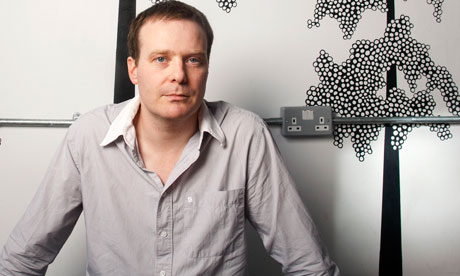
Tom McCarthy

Tom McCarthy [The Guardian]

from Tom McCarthy's Satin Island:

11.6 You still haven't told me how you came to be in that airport, I said to Madison as we lay in bed one evening. There's lots of things I haven't told you, she replied. If people were to tell other people everything about themselves, we'd live in a dull world. If knowing everything about a person were the be-all and end-all of human interaction, she said, we'd just carry memory-sticks around and plug them into one another when we met. We could have little ports, slits on our sides, like extra mouths or ears or sex organs, and we'd slip these sticks in and upload, instead of talking or screwing or whatever. Would you like that, Mr. Anthropologist? No, I told her; I don't want to know everything about you. This was true; I hadn't asked her very much about herself at all — her family, her background, any of that stuff — not back in Budapest when we'd first met, and not since, either. Our liaison had been based throughout on minimum exchange of information. I don't want to know everything about you, I repeated. I just want to know what you were doing in Turin. I wasn't in Turin, she said again. Torino-Caselle, I replied, whatever. Why? she asked. I'm intrigued, I told her. What, professionally? she goaded me. That's right, I said: professionally. Well then you'll have to pay me, she said.

Tuesday, March 31, 2015

Bernadette Mayer

Bernadette Mayer [The Arbiter]

from Bernadette Mayer's A Bernadette Mayer Reader:

Essay

I guess it's too late to live on the farm
I guess it's too late to move to a farm
I guess it's too late to start farming
I guess it's too late to begin farming
I guess we'll never have a farm
I guess we're too old to do farming
I guess we couldn't afford to buy a farm anyway
I guess we're not suited to being farmers
I guess we'll never have a farm now
I guess farming is not in the cards now
I guess Lewis wouldn't make a good farmer
I guess I can't expect we'll ever have a farm now
I guess I have to give up all my dreams of being a farmer
I guess I'll never be a farmer now
We couldn't get a farm anyway though Allen Ginsburg got one late in life
Maybe someday I'll have a big garden
I guess farming is really out
Feeding the pigs and chickens, walking between miles of rose of crops
I guess farming is just too difficult
We'll never have a farm
Too much work and still to be poets
Who are the farmer poets
Was there ever a poet who had a self-sufficient farm
Flannery O'Connor raised peacocks
And Wendell Berry has a farm
Faulkner may have farmed a little
And Robert Frost had farmland
And someone tole me Samuel Beckett farmed
Very few poets are real farmers
If William Carlos Williams could be a doctor and Charlie Vermont too,
Why not a poet who is also a farmer
Of course there was Brook Farm
And Virgil raised bees
Perhaps some poets of the past were overseers of farmers
I guess poets tend to live more momentarily
Than life on a farm would allow
You could never leave the farm to give a reading
Or go to a lecture by Emerson in Concord
I don't want to be a farmer but my mother was right
I should never have tried to rise out of the proletariat
Unless I can convince myself as Satan argues with Eve
That we are among a proletariat of poets of all the classes
Each ill-paid and surviving on nothing
Or on as little as one needs to survive
Steadfast as any farmer and fixed as the stars
Tenants of a vision w rent out endlessly

Saturday, March 28, 2015

Ode to Firestarting


Ode to Firestarting

Even before
beginning 
I admire
sourdough 
starter risen 
through the night 
to frothy 
soup.
Torn shipping box
in hand
I open 
the stove door,
sweep
yesterday’s ash
flat
with sandwiched 
corrugation,
crinkle
brown paper,
toss in
a handful of
grocery receipts,
sprinkle 
of fir cones
crisscrossed
by mossy twigs,
two larger twigs
feathered
with serrate leaves,
a half-rotted 
redwood chunk,
thick curl 
of oak bark.
One match 
fires
two paper corners,
brittle leaves,
though minutes 
pass before flame
slithers
through the bark tunnel,
leaps
to iron 
firebox roof,
my signal
to layer on
a starter log
without tumbling
the still
fragile pyre.
I brew & drink
Earl Grey,
breakfast
on egg & bacon,
ready myself
to measure
water, flour, & salt,
to kneel
& knead
the morning bread.

Wednesday, March 25, 2015

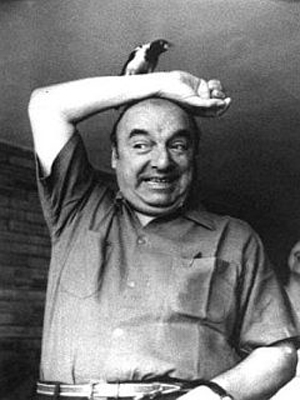
Pablo Neruda

Pablo Neruda [Haiti Chery]

from Pablo Neruda's Odes to Opposites, tr. Ken Krabbenhoft:

Ode to Solitude

O solitude, beautiful 
word: crab- 
grass 
grows between your syllables! 
But you are only a pale 
word, fool’s 
gold 
and counterfeit coin! 
I painted solitude in literary 
strokes, 
dressed it in a tie 
I had copied from a book, 
and the shirt 
of sleep. 
But 
I first really saw it when I was by myself. 
I’d never seen an animal 
quite like it: 
it looks like 
a hairy spider 
or the flies 
that hover over dung, 
and its camel paws have 
suckers like a deep-sea snake. 
It stinks like a warehouse piled high 
with brown hides of rats and seals 
that have been rotting forever. 
Solitude, I want you 
to stop lying through the mouths of books. 
Consider the brooding young poet: 
he’s looking for a black marble slab 
to seduce 
the sleeping senorita; in your honor he erects 
a simple statue 
that he’ll forget 
the morning of his wedding. 
But 
in the half-light of those early years 
we boys stumble across her 
and take her for a black goddess 
shipped from distant islands. 
We play with her torso and pledge 
the perfect reverence of childhood. 
As for the creativity
of solitude: it’s a lie. 
Seeds don’t live 
singly underneath the soil: 
it takes hordes of them to insure 
the deep harmony of our lives, 
and water is but the transparent mother 
of invisible submarine choirs. 

The desert 
Is the earth’s solitude, and mankind’s 
solitude 
is sterile 
like the desert. The same 
hours, nights and days 
wrap the whole planet 
in their cloak — 
but they leave nothing in the desert. 
Solitude does not accept seeds. 

A ship on the sea 
isn’t the only image of its beauty. 
It flies over the water like a dove, 
end product 
of wondrous collaborations 
between fires and stokers, 
navigators and stars, 
men’s arms and flags in congregation, 
shared loves and destinies. 

In its search for self-expression 
music sought out 
the choir’s coral hardness. 
It was written 
not by a single man 
but by a whole score 
of musical relations. 

And this word 
which I poise here suspended on a branch, 
this song that yearns 
solely for the solitude of your lips 
to repeat it — 
the air inscribes it at my side, lives 
that were lived long before me. 
And you, who are reading my ode: 
you’ve used it against your own solitude. 
We’ve never met, and yet it’s your hands 
that wrote these lines, with mine.

Monday, March 16, 2015

Pablo Neruda

Pablo Neruda [Fabreeze]

from The Essential Neruda: Selected Poems, ed. Mark Eisner:

Ode to a Watch in the Night

In the night, in your hand
my watch glowed
like a firefly.
I heard
its ticking:
like a dry whisper
it arose
from your invisible hand.
Then your hand
returned to my dark breast
to gather my sleep and its pulse.

The watch
went on cutting time
with its little saw.
As in a forest
fragments of wood,
tiny drops, pieces
of branches or nests
fall
without changing the silence,
without ending the cool darkness,
so
from your invisible hand
the watch went on cutting
time, time,
and minutes fell
like leaves,
fibers of broken time,
little black feathers.
As in the forest
we smelled roots,
somewhere water released
a fat drop
like a wet grape.
A little mill
was grinding the night,
the shadow whispered
falling from your hand
and filled the earth.
Dust,
earth, distance,
my watch in the night
was grinding and grinding
from your hand.

I put
my arm
under your invisible neck,
under its warm weight,
and in my hand
time fell,
the night,
little noises
of wood and forest,
of divided night,
of fragments of shadow,
of water that falls and falls:
then
sleep fell
from the watch and from
your two sleeping hands,
it fell like the dark water
of the forests,
from the watch
to your body,
from you toward countries,
dark water,
time that falls
and runs
inside us.

And that’s how it was, that night,
shadow and space, earth
and time,
something that runs and falls
and passes.
And that’s how all the nights
go over the earth,
leaving only a vague
black odor.
A leaf falls,
a drop
on the earth
muffles its sound,
the forest sleeps, the waters,
the meadows,
the bells,
the eyes.

I hear you and you breathe,
my love,
we sleep.

[translated by Stephen Mitchell]

Saturday, March 14, 2015

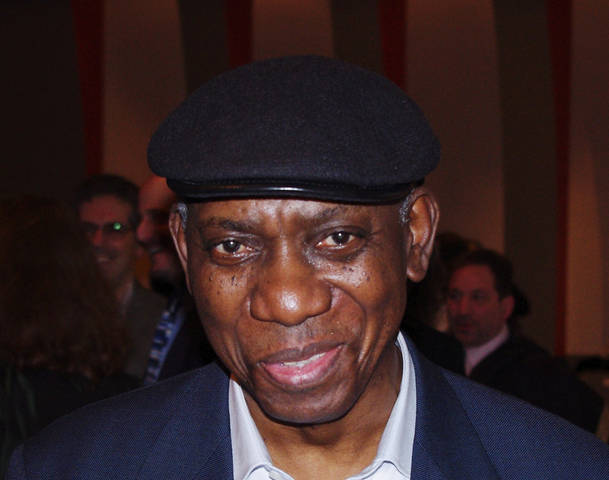
Yusef Komunyakaa


A Reed Boat

The boat's tarred and shellacked to a water-repellent finish, just sway-dancing with the current's ebb, light as a woman in love. It pushes off again, cutting through lotus blossoms, sediment, guilt, unforgivable darkness. Anything with half a root or heart could grow in this lagoon.

There's a pull against what's hidden from day, all that hurts. At dawn the gatherer's shadow backstrokes across water, an instrument tuned for gods and monsters in the murky kingdom below. Blossoms lean into his fast hands, as if snapping themselves in half, giving in to some law.

Slow, rhetorical light cuts between night and day, like nude bathers embracing. The boat nudges deeper, with the ease of silverfish. I know by his fluid movements, there isn't the shadow of a bomber on the water any more, gliding like a dream of death. Mystery grows out of the decay of dead things — each blossom a kiss from the unknown.

When I stand on the steps of Hanoi's West Lake Guest House, feeling that I am watched as I gaze at the boatman, it's hard to act like we're the only two left in the world. He balances on his boat of Ra, turning left and right, reaching through and beyond, as if the day is a woman he can pull into his arms.

Sunday, March 8, 2015

Denise Levertov


What Wild Dawns There Were

What wild dawns there were
      in our first years here
when we would run outdoors naked
to pee in the long grass behind the house
             and see over the hills such streamers,
             such banners full of fire and blue (the blue
             that is Lilith to full day’s honest Eve) —
What feathers of gold under the morning star
      we saw from dazed eyes before
stumbling back to bed chilled with dew
to sleep till the sun was high!

Now if we wake early
      we don’t go outdoors — or I don’t —
      and you if you do go
      rarely call me to see the day break.
I watch the dawn through glass: this year
             only cloudless flushes of light, paleness
             slowly turning to rose,
             and fading subdued.
We have not spoken of these tired
risings of the sun.

Mad Song

My madness is dear to me.
I who was almost always the sanest among my friends,
one to whom others came for comfort,
now at my breasts (that look timid and ignorant,
                that don’t look as if milk had flowed from them,
                years gone by)
cherish a viper.
                       Hail, little serpent of useless longing
that may destroy me,
that bites me with such idle
needle teeth.

I who am loved by those who love me
for honesty,
to whom life was an honest breath
                           taken in good faith,
I’ve forgotten how to tell joy from bitterness.

Dear to me, dear to me,
blue poison, green pain in the mind’s veins.
How am I to be cured against my will?

Sunday, March 1, 2015

Denise Levertov

Denise Levertov [Poetry Society of America]


Memory demands so much

Memory demands so much,
it wants every fiber
told and retold.
                          It gives and gives
but for a price, making you
risk drudgery, lapse
into document, treacheries
of glaring noon and a slow march.
Leaf never before
seen or envisioned, flying spider
of rose-red autumn, playing
a lone current of undecided wind,
lift me with you, take me
off this ground of memory that clings
to my feet like thick clay,
exacting gratitude for gifts and gifts.
Take me flying before
you vanish, leaf, before
I have time to remember you,
intent instead on being
in the midst of that flight,
of those unforeseeable words.


Once Only

All which, because it was
flame and song and granted us
joy, we thought we'd do, be, revisit,
turns out to have been what it was
that once, only; every initiation
did not begin
a series, a build-up: the marvelous
               did happen in our lives, our stories
               are not drab with its absence: but don't
expect now to return for more. Whatever more
there will be will be
unique as those were unique. Try
to acknowledge the next
song in its body-halo of flames as utterly
present, as now or never.

Tuesday, February 24, 2015

Warp


Warp

Down a black hole is where I go
to bank the fire, to make it flare,
the light creates this extraordinary halo

round each & every friend qua foe.
Blinkered, second geared
down a black hole is where I go,

outside’s a world of TV snow.
Inside, the haunts of hibernating bears
where light creates this extraordinary halo.

I don’t look up or say hello
except to white rabbits, pair by pair
down a black hole is where we go,

the answer to everything a simple no.
Stepping a deep woods trail, a deer
bears the light of this extraordinary halo

pierced by a poisoned arrow,
sirens & furies fired it there.
Down a black hole is where I go,
the light creates this extraordinary halo.

Thursday, February 12, 2015

Anselm Berrigan

Anselm Berrigan [Poetry Foundation]


Armed with an early
termination fee, a
delusion with regard
to neither denying
nor being of the past,
a lazy fly to center,
a transcription of
a stain on the soul
of the off-looker

. . . In
that we’re waiting on
the okapi to organize
and go on strike, or
counterstrike. In that I
am waiting for the stuffed
okapi, the evil kitty, the
frozen hop, the spineless
doggy, the tubby fox
with babe to organize
and resist. I don’t think
the destructive will aimed
on the inside is elusive
if one is sensitive, but
the tangle of sentences
is hard on the eyelids.

. . . I like
to pay for time as I go
or am just used to doing
so and currently willing
to remark upon it under
the rubric of being
personal, though it’s
just as personal to wipe
my dirty hands across
these pinkened eyes or
pluck that bug from
my wind, both banal
gestures devoid of
disgust.

. . . I’m a child
programmed to punish
the world.

. . . there’s at least a
germ of truth in there
infecting my psyche.

. . . it’s necessary
to finally renounce violence
everywhere in one’s life
but in one’s self-accusations
isn’t it.

Lydia Davis

Lydia Davis [Reuters]

from Lydia Davis's Can't and Won't:

Handel

I have a problem in my marriage, which is that I simply do not like George Frideric Handel as much as my husband does. It is a real barrier between us. I am envious of one couple we know, for example, who both love Handel so much they will sometimes fly all the way to Texas just to hear a particular tenor sing a part in one of his operas. By now, they have also converted another friend of ours into a lover of Handel. I am surprised, because the last time she and I talked about music, what she loved was Hank Williams. All three of them went by train to Washington, D.C., this year to hear Giulio Cesare in Egitto. I prefer the composers of the nineteenth century and particularly Dvořák. But I’m pretty open to all sorts of music, and usually if I’m exposed to something long enough. I come to like it. But even though my husband puts on some sort of Handel vocal music almost every night if I don’t say anything to stop him, I have not come to love Handel. Fortunately, I have just found out that there is a therapist not too far from here, in Lenox, Massachusetts, who specializes in Handel-therapy, and I’m going to give her a try. (My husband does not believe in therapy and I know he would not go to a Dvořák-therapist with me even if there was one.)

Monday, February 9, 2015

Anne Shaw

Anne Shaw [University of Arizona]

from Anne Shaw's Dido in Winter:

Unruly Clock

How strangely things unmoor themselves.
For instance, overhead: shadow of a bird
without a bird. As paint peels back
from the porch front, cloud-thread
raveled out against the blue. How my body
craves extinction. Yours, a tenderness.
On top of or below. As the preposition
wanders from its noun. The lip
and its restriction. You, the fricative angel
in my bed. How a bulb turns on
in the farmhouse: a private
radiance. And the body's rapt attention,
apparent slips of tongue. Some truths
I kidnap back into the dark. My realm
of unbecoming, kingdom of shatter and thrust. Fields
in the side view plated now with water over loam.
The little clatter the mind makes, and each
peculiar crevice of a heart. Such beds of flood
and thistle: their many endings, turnings,
passings-through. Then all my slick retractions
flattering a passage through the skull. There is luck
and luck's remission, there are freckled hands
on locks, tallow-meshes hanging in the trees. And the bees
relentless, hungry now, summer or its semblance
bent in sad arrival, creeping charlie tiny in the lawn —


In Motion

Alone on Sunday afternoon, I watch the dog's paws twitching as he sleeps.
His dream turns like a newsreel, simple chase
between snapped branches, lurching toward a sky,
the path irrelevant, his prey a prayer, the blue flame of his being
flared to high. Call it small recurrent animal, this dream
that all dogs dream, like that relentless dream of ropes and stays
in which I turn my body like a filmstrip
to the light. Yes, pin me
to the window, watch me jerk
from frame to animated frame. Each small, belabored increment. Each day
a pink sun moving south against the wall
glides through the strictures of winter. The camera
lucida or obscura. Here are my lumpy socks, my unmade bed. No tragedy
in these particulars. But friends, when I sit at your table
there's a voice in me that says Give
up. Give up. It pumps along like a half-dead frog.
Ladies and gentlemen, it says, this train has left the station. Wave
to your friends on the platform. You may begin
to panic at any time.

Sunday, February 8, 2015

Plainsong

[photo by Tova Olivia Pappas]
Plainsong

The penny dropped
falls to silence
where I remain for a long time
copper greening
at the bottom of an empty vase.
What fits me alone?
What to claim?
What to carry into wilderness —
a cliff, a ridge, a blind corner
antler splinted,
foxes at low windows,
pantry gutted by sly invaders.
Disturbed cats
flee to high places.
Feral we pace, unceasing
noon, dusk, dawn
blunder makes a music play —
riotous dance.
Owls & night-coiled snakes
outside the cracked glass
stare.

Sunday, February 1, 2015

Susan Howe

[Prufrock's Dilemma]

from Susan Howe's The Midnight:

Ten thousandth truth

Ten thousandth impulse
Do not mince matter
as if tumbling were pat
parable preached in
hedge-sparrow gospel
For the lily welcomes
Owl! art thou mad?
Why dost thou twit me
with foreknowledge

To this the Nihtegale
gave answer that twig
of thine thou shouldst
sing another tune Owl
Still in Ovid cloth of
scarlet the Owl and her
"Old Side" blue thread
Listen! Let me speak!
the Wren replied I do
not want lawlessness . . .

Evening for the Owl
spoke wisely and well
willing to suffer them
and come flying night
from the Carolingian
mid owl falcon fable
In their company saw
all things clearly wel
Unfele I could not do

Nihtegale to the taunt
Owl a preost be piping
Overgo al soke iseon
sede warme inome nv
still one bare word
Go he started mid ivi
Grene al never ne nede
Song long ago al so
sumere chorless awey