Monday, April 28, 2014

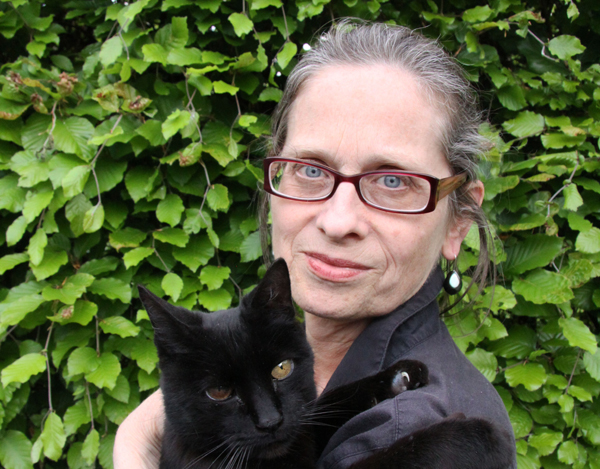
Lydia Davis

Lydia Davis [Paris Review]

from Lydia Davis's Collected Stories:

Our Kindness

We have ideals of being very kind to everyone in the world. But then we are very unkind to our own husband, the person who is closest at hand to us. But then we think he is preventing us from being kind to everyone else in the world. Because he does not want us to know those other people, we think! He would prefer us to stay here in our own house. He says the car is old. We know that really he would prefer us to be acquainted with only a small number of people in the world, as he is. But what he says is that the car would not take us very far. We know he would prefer us to look after our own house and our own family. Our house is not clean, not completely clean. Our family is not completely clean. We think the car would serve us well enough. But he thinks we may want to go out and be kind to other people only because we would prefer not to be at home, because we would prefer not to have to be kind only to these three people, of all the people in the world the hardest three for us, though we can easily be kind to so many other people, such as those we meet in stores, where we go because there our car, he says, may safely take us.

Saturday, April 26, 2014

Virginia Woolf

Virginia & Vanessa Stephens [Book Snob]

from Virginia Woolf’s “A Sketch of the Past”:

I find that scene-making is my natural way of marking the past. A scene always comes to the top; arranged; representative. This confirms me in my instinctive notion — it is irrational; it will not stand argument — that we are sealed vessels afloat upon what it is convenient to call reality; at some moments, without a reason, without an effort, the sealing matter cracks; in floods reality; that is a scene — for they would not survive entire so many ruinous years unless they were made of something permanent; that is a proof of their “reality.” Is this liability of mine to scene-receiving the origin of my writing impulse?

Friday, April 25, 2014

Tooth & Claw


Tooth & Claw

Downslope from my bed
homeless squabble.
They sleep beside the creek.
Their piss & defecations mark trees
the leashed & licensed dogs
tag by daylight.
Chartreuse-pinnied
park staff wade past rocks
bared in the drought year’s shallows,
peer through brush
at populations
unimpressed by cleanup.
Fed by the water treatment plant
a rackety pump’s nozzle
gushes frothy gallons
down the rubbish-spackled bank
hardly a body’s length
from a freeloader’s tent.
They grow.

Monday, April 21, 2014

Mary Ruefle

Mary Ruefle [UNCW]

from Mary Ruefle's Selected Poems:

Perfume River

She thinks fishing is an odd way
to make love: watching her husband rooted
in water, slick to the hips under the arch
of a bridge, his whole rod nodding
like hart's tongue fern in its youth.
She has other thoughts hidden
inside of these, barely visible
like the stamens of crocus.

Ah spring! The cedar waxwing with a plume
in his ass, pumping seeds from his mouth
like a pinball machine.

Palaver of scents
and the boys standing naked under the waterfall.
Pachinko! The word enters her bloodstream:

Holy Mary mother of God-who's-gone-fishing-today,
she'll stay out bog-trotting until she's
blue in the face, like an orchid.

Wednesday, April 16, 2014

Anne Carson

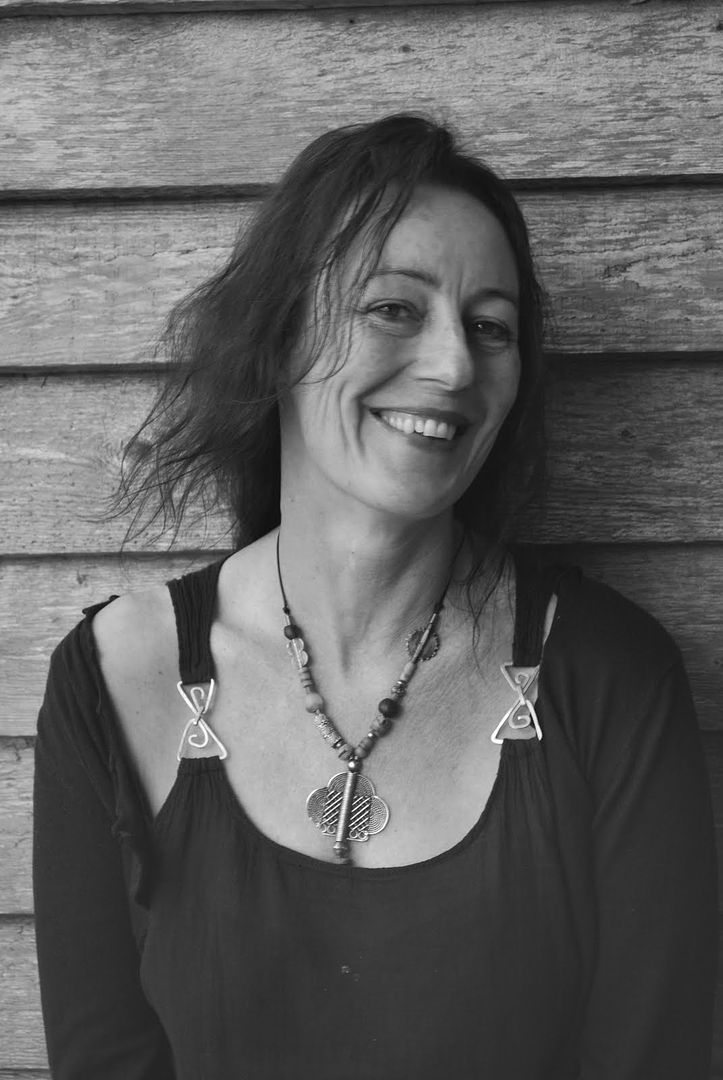
Anne Carson [Marta Spendowska]


Emily is in the parlor brushing the carpet,”
records Charlotte in 1828.
Unsociable even at home

and unable to meet the eyes of strangers when she ventured out,
Emily made her awkward way
across days and years whose bareness appalls her biographers.

This sad stunted life, says one.
Uninteresting, unremarkable, wracked by disappointment
and despair, says another.

She could have been a great navigator if she’d been male,
suggests a third. Meanwhile
Emily continued to brush into the carpet the question,

Why cast the world away.
For someone hooked up to Thou,
the world may have seemed a kind of half-finished sentence.

But in between the neighbour who recalls her
coming in from a walk on the moors
with her face “lit up by a divine light”

and the sister who tells us
Emily never made a friend in her life,
is a space where the little raw soul

slips through.
It goes skimming the deep keel like a storm petrel,
out of sight.

The little raw soul was caught by no one.
She didn’t have friends, children, sex, religion, marriage, success, a salary
or a fear of death. She worked

in total six months of her life (at a school in Halifax)
and died on the sofa at home at 2 P.M. on a winter afternoon
in her thirty-first year. She spent

most of the hours of her life brushing the carpet,
walking the moor
or whaching. She says

it gave her peace.

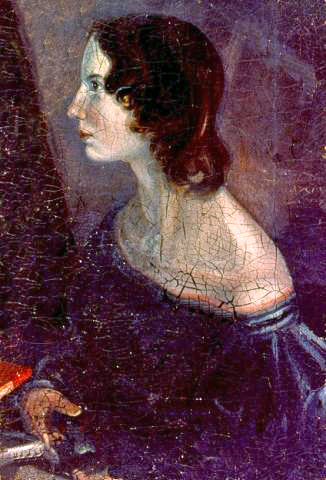
Emily Brontë [Branwell Brontë]

Monday, April 14, 2014

Joshua Poteat

Joshua Poteat [Vimeo]


Illustrating the seventeenth century
             [PLATE UNKNOWN]
after Bohumil Hrabal

Evening comes, black wig of roots after the storm.

             Dandelions cataract the ditches, deserted as stars,

a star in each milky eye, a star like the hole you shoot
                          through a pillowcase. That is something

they never ask you: What is death to these weeds?

             What is beyond suffering? It doesn’t mean we will

all turn out horribly. It just means too much rain
                          can make a weed drunk with courage.

It used to be called chivalry, to save a girl

             from the mouths of beasts, then take

her foot in your mouth for your own doings.
                          To lure a tapeworm up from the caverns

of your bowels, give yourself a milk bath.

             A peasant hoeing in the fields once took

his thumb for a grub and hacked it off.
                          Nobody appreciates these kinds of things

anymore. Even money’s lost its charm.

             We’re inclined to tragedy now.

There was always someone carrying
                          his guts off in a bucket back then.

The dead have a name for it,
             but they aren’t talking.

Given’s as good as gone.

Thursday, April 3, 2014

Che Qianzi

Che Qianzi [Poetry East West]

from Language from a New Century: Contemporary Poetry from the Middle East, Asia, & Beyond, ed. Tina Chang, Nathalie Handal, & Ravi Shankar:

Sentences
by Che Qianzi, tr. Jeffrey Twitchell-Wass & Yang Liping

1: A spire in the north. A spire in the south. In the south a nail was pulled out.

2: A half moon, two earths, one earth, very soft when stepped on, very soft shyster.

3: The gods appear to have freckled faces; the masses’ point of view; the rubble creeps over the branches; you are going to hunt birds.

4: A box that cannot keep secrets, darkness and Jiangsu Province, will be reduced to a leaky cage. In the cage there is nothing, the background contains it.

5: A water drop too is curved.

6: Lace words on the cuff, Tailor Song threads the eye of the needle. Shrimp heads twisted off their bodies.

7: Tadpoles drifting between commas, differentiated by their tails, were finally expelled from the fictitious revolutionary troop. Transformed into iron-skin green frogs, with the press of a button they jump without stop, without stop.

8: One sentence is no longer than one character. The character gets a big head. The character becomes a big star. A spire. Ursa Major hammering bright the nails in the north.

9: One sentence circled three times around one character, circling the fourth time it broke.

Wednesday, April 2, 2014

Edward Abbey

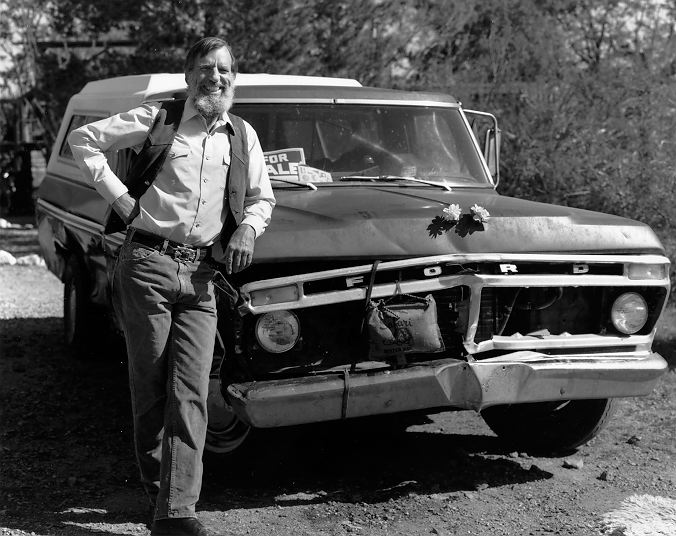
Edward Abbey [Abbey's Web]


The personification of the natural is exactly the tendency I wish to suppress in myself, to eliminate for good. I am here not only to evade for a while the clamor and filth and confusion of the cultural apparatus but also to confront, immediately and directly if it’s possible, the bare bones of existence, the elemental and fundamental, the bedrock which sustains us. I want to be able to look at and into a juniper tree, a piece of quartz, a vulture, a spider, and see it as it is in itself, devoid of all humanly ascribed qualities, anti-Kantian, even the categories of scientific description. . . .

the strangeness and wonder of existence are emphasized here in the desert, by the comparative sparsity of the flora and fauna: life not crowded upon life as in other places but scattered abroad in spareness and simplicity; with a generous gift of space for each herb and bush and tree, each stem of grass, so that the living organism stands out bold and brave and vivid against the lifeless sand and barren rock. The extreme clarity of the desert light is equaled by the extreme individuation of desert life-forms. Love flowers best in openness and freedom. . . .

I can hear myself think. . . .

In the evening the wind stops. A low gray ceiling of clouds hangs over the desert from horizon to horizon, silent and still. One small opening remains in the west. The sun peers through as it goes down. For a few minutes the voodoo monuments burn with a golden light, then fade to rose and blue and violet as the sun winks out and drops. My private juniper stands alone, one dead claw reaching at the sky. The blossoms on the cliffrose are folding up, the scarlet penstemon and the bayonets of the yucca turn dull and vague in the twilight. . . .

A venturesome minority will always be eager to set off on their own, and no obstacles should be placed in their path; let them take risks, for godsake, let them get lost, sunburnt, stranded, drowned, eaten by bears, buried alive under avalanches — that is the right a privilege of any free American. . . .

At what distance should good neighbors build their houses? Let it be determined by the community’s mode of travel: if by foot, four miles; if by horseback, eight miles; if by motorcar, twenty-four miles; if by airplane, ninety-six miles. . . .

to evade for a while the clamor and filth and confusion of the cultural apparatus but also to confront, immediately and directly if it’s possible, the bare bones of existence . . . the bedrock

Monday, March 31, 2014

Elise Cowen

Elise Cowen [Ahsahta Press]

from Elise Cowen's Elise Cowen: Poems and Fragments, ed. Tony Trigilio:


A cockroach

Crept into
My shoe
He liked that fragrant dark

A cockroach

Climbed into
My shoe
Away from cold & light
I crept my hand
In
After him

Cockroach

            The best I can do for you
            Is compare you to bronze
            And the Jews
            You're not really welcome
                       to use my shoe
            For a roadside rest

Obvious

From the shadow of my hand
You keep coming back
            across my floor
For more? — look —

You've lost an antenna

I treat you
            seriously affectionately as a child

——


And not to forget

            the cockroach
that crawled across
the floor & painted
blue under the stove
somewhere in the [   ]
to God knows where

——


Keep out of the light

Out of the dangerous radiance of
Bong Eyes
Respect the cockroach centuries
And the heavy confection of plunder kitchen

——


Must I move to get away from killing you

And carry to Sutton Place in the back of my mind
            back to San Francisco ants
To get away from you?
I know —
            I'll starve a hungry cat
            And name it Darwin

Angels

            If I crawled into your crack in the wall
            Four clumsy appendages, too dumb to talk
            What would you & your dynasty do?
            Tickle me to death under your indifferent feet
            Teach me to be a makeshift cockroach
            Live off my flesh & use the bones for cockroach walls

Cockroaches

          Prepare
I'm coming in

Sunday, March 30, 2014

Canto 10


Canto 10

Dante's never-subsiding
hell of folks are dead
not dying.

To wit, what so many dread
has happened al-
ready.

Worse yet, folks in hell
repeatedly suffer
devilish ills

plus their torture
won't end
even if they offer

now to repent.
No, they’ve waited too long
to mend

or sing for pardon.

Friday, March 28, 2014

28 March 2014

Dan Beachy-Quick [Coffee House Press]

from Dan Beachy-Quick's An Impenetrable Screen of Purest Sky:

I went into my office and closed the door. My desk I kept perfectly clear. Books on the shelves in alphabetic order. No photos on the walls; only a clock whose minute hand vibrated when it clicked into place. A window overlooked the green where students hurried between classes, where the old oak with the obtuse burl grew more grotesque by the decade. A dead fly on the windowsill; I picked it up carefully by the tip of one wing; its forelegs pressed together as if in anticipation of prayer; I dropped it in the wastepaper basket. As if I needed a reminder, I thought. To inspire one must be inspired. I had been and now . . . it was, or I was, or both were, changed. Not that the books I taught had fallen in my love or regard for them. The opposite. I loved them as much as I ever had, maybe more; I just felt incapable of being loved by them in return. Somehow I had made myself unworthy of the words, those others' words — words that had put in my mind worlds, a careful disorder I lived within and out from which I looked at my students and invited them in. The classroom is its own peculiar cosmos, built not of natural laws, but of laws of attention — sympathetic chords that the teacher plucks in himself so as to secretly force the same note to vibrate in his student. How does one learn? — that is an awful, unanswerable question. I wanted my students to suffer a confusion that clarified, to leave the classroom unable to explain even to themselves what had just occurred over the previous two hours, as if, once one stepped back out the threshold of the classroom's door the spell had been broken, one had unwittingly drunk from the river Lethe by stepping over it, invisible though it may be, and the distinct memory of the discussion, what the discussion brought light to, slowly disappeared in content even as it remained in form, an empty form whose emptiness was the only reminder that it had once been full, world-full, thought-full, but a few minutes ago. Knowledge was this absence of knowing — that is what I taught, thought. But how could I have suspected I would become my own philosophy? That from within emptiness I would have only emptiness to offer? To speak about pages as if they were still blank, to hold them up and say, See, do you see — say it if you do — that underneath these words the page is blank? The words disguise that blankness as meaning in order to secretly imbed the blankness in you. Words speak around a silent heart. A word is a giant who buries his heart in silence where it can never be found, and in the silence it pulses, not a sound, but sound's opposite, a blank deafness of muteness inside a simpler quiet, the mind's quiet when it seems to say to itself, I'm ready to think, and then waits for thought to begin. Blank faces, they all look at you, little planets above the flat plane of their desks. It isn't a look of expectation, not of hope, not of yearning — it is a look of fact, the fact of itself. The eye is a dark tunnel behind which mysterious processes occur — distraction and judgment. Behind the eye is the clear pool Narcissus stares into and drowns; but so too is Echo's echo chamber, all the words others speak to us rebounding against the skull only to be spoken back. The world is the condition of asking others to love you by using their own words to convince them to do so. Infinite repeat. Day after day of walking from my office, walking down the hall, down the stairs, to the classroom where students were still assembling, the dark wainscoting adhering to the wall, waiting for them to sit, for chatter to subside, not a silence of patience, but the old chaos in whose silence alone meaning could occur; saying over and over again, countless times, let's open our books, let's open our books, the sound of the pages being thumbed through, let's open our books, specifying a page, a specific word, the breath in a sentence one comma requires you to take, let's open our books. It is a form of enchantment. Professor as conjure-man, professor as initiate, professor as medicine man, professor as holy fool, shaking the book as a shaman shakes the rattle, beating the book as the shaman beats the drum — but it ends. It does not end well. The hand drops from its power, or the power drops from it the hand.

I try to not let myself feel how it is I feel.

I try not to remember; I write so I don't need to remember — let the pages live that life.

But I fail.

The dead fly I'd thrown in the trash bin rattled weakly against the metal, not dead at all. The metal amplified the sound, a buzzing that didn't fill the room but annoyed the ear, the flightless wings trying to fly. I don't know why, I don't know why it must be so, all of it — that it is as it is, has been as it has been, my life; my life's transparent wing. I looked out the window at the oak, blue storm-light darkening the sky, and I thought, I can't bear it.

No, I said it to myself differently. I said, It can't be borne.

Thursday, March 27, 2014

Carolyn Kizer

Carolyn Kizer [Too Much Monkey Business]

from Carolyn Kizer's Cool, Calm & Collected: Poems 1960-2000:

A Widow in Wintertime

Last night a baby gargled in the throes
Of a fatal spasm. My children are all grown
Past infant strangles: so, reassured, I knew
Some other baby perished in the snow.
But no. The cat was making love again.

Later, I went down and let her in.
She hung her tail, flagging from her sins.
Though she'd eaten, I forked out another dinner,
Being myself hungry all ways, and thin
From metaphysic famines she knows nothing of.

The feckless beast! Even so, resemblances
Were on my mind: female and feline, though
She preens herself from satisfaction, and does
Not mind lying even in snow. She is
Lofty and bedraggled, without the need to choose.

As an ex-animal, I look fondly on
Her excesses and simplicities, and would not return
To them: taking no marks for what I have become,
Merely that my nine lives peal in my ears again
And again, ring in these austerities,

These arbitrary disciplines of mine,
Most of them trivial: like covering
The children on my way to bed, and trying
To live well enough alone, and not to dream
Of grappling in the snow, claws plunged in fur,

Or waken in a caterwaul of dying.

Wednesday, March 26, 2014

The Clubhouse

[photo by Candace Porth]

The Clubhouse

wreathed in my dream
by shrubs, roped by wisteria
here is stucco & tile clamped
to the desert, wind scoured,
the roadside plantings olive,
twisted 50-year stock
trucked from Mendoza,
so many bare leaved,
others warm to the site,
sprout green from tough-
skinned knobs, sand.

Tuesday, March 25, 2014

25 March 2014

Weldon Kees [mockingbird.creighton.edu]

from Weldon Kees's The Collected Poems:

On a Painting by Rousseau

The clouds seem neater than the trees.
The sky, like faded overalls,
Breaks the distances of sight;
And shadow that defines the curb
Shelters the silhouette of dog
Who, waiting patiently beneath
The amazing carriage with tangerine wheels,
Is eyeless, though he seems to sense
The black Chihuahua that the pavement grows.

The street is bare. The hooves and mane
Of the posing horse and his speckled flanks
Flow back to the six in the cart he draws:
The idiot aunt and the girl in white
(A ventriloquist's doll with a colorless wig),
And a sexless figure upon whose lap
A beast is squatting, macabre, blurred.

These four and the one in the yellow hat
Regard us with eyes like photographs
That have been shown us long ago.
— All but the man in the driver's seat,
His wax hands fastened on the reins,
Who, from the corners of his eyes,
Watches the horse he does not trust.


Henri Rousseau's Old Junier's Cart (1908)


Monday, March 24, 2014

Lawrence Millman

Lawrence Millman [Geophysical Institute]

from Lawrence Millman's Last Places: A Journey in the North:

Eyvindur Jónsson was born in 1714 and enjoyed a quite normal childhood except for his constant desire to steal. He started out with small things, like household utensils, and then worked his way up to livestock. Finally, after a large quantity of stolen sheep were found in his possession, the Althing proclaimed him an outlaw. Now he took to the mountains and pursued his trade in earnest, stealing sheep morning, noon, and night from rich and poor alike. No account of his career ever mentions personal gain or a violent craving for mutton. Eyvindur simply stole sheep as some other talented lad might have written verse. Indeed, one of the few descriptions of him warns his potential victims that "he is frequently heard humming strophes of rimur or old songs." He would arrive at a farm — incognito, of course — and first win the farmer's trust. Then he'd make off with the man's sheep, as if it were wrong just to descend on the farm and steal the sheep. When it came time for him to marry, he made certain the woman of his heart, a young widow named Halla Jónsdottir, shared his interest in sheep thievery. If a farmer or sheriff got too hot on their trail, Eyvindur and Halla would disappear into the uncharted interior. Eyvindur himself was no faster on his feet than the next man, but he had a strategy that enabled him to escape even his swiftest pursuers — he turned cartwheels. An entrancing vision this is: a lone outlaw cartwheeling wildly over lava and sand, as the forces of law and order lag ever farther behind him.

"Eyvindur hid here," Gisli said, "during the winter of 1774-5. He had a dead horse for a roof. He ate the meat from this horse and by spring the sun was shining through its bones. A year later he was pardoned. Twenty years he'd been an outlaw. The government won't let you be an outlaw longer than that."

I looked at this heap of stones and tried to imagine someone living there. In its prime it would not have measured more than five feet by three feet, hardly enough room to turn a single enervated cartwheel in. But Iceland seems to prepare a person for the stoniest of conditions and fosters in him the most creative of survival tactics: if a dead horse is your roof, at least it keeps out the weather.

Whereas Eyvindur stole sheep, Bensi retrieved them. He was a scruffy, snuff-taking farm laborer whose job it was to find missing sheep. Once he struggled for days to bring back a single sheep to Grimstad farm, but then he lost it. This legendary effort — only a slightly dotty person like Bensi would have been so worried about a lone sheep — provided Gunnar Gunnarson with the idea for his 1944 novella The Good Shepherd, which is about a snuff-taking shepherd's failure to retrieve a sheep during a Christmas Eve blizzard. According to Gisli, Ernest Hemingway cribbed The Good Shepherd for his novella The Old Man and the Sea ("Every Icelander knows how Hemingway stole from Gunnar Gunnarson"), turning Bensi into the old Cuban fisherman, the sheep into the tenacious marlin, and the Christmas Eve blizzard — this I found a little improbable — into the Caribbean Sea.

"I've often wondered why he committed suicide," Gisli said.

"Who? Bensi?"

"Nej, Hemingway. Do you suppose he felt guilty about stealing from Gunnar Gunnarson?"

Sunday, March 23, 2014

Kamau Brathwaite

Kamau Brathwaite [AS/COA]

from Kamau Brathwaite's Ancestors:


Milkweed

But my father has gone out on the plantation
he use to make us windmills
spinnakers of trash when the crack of cane was in the air
their brown ecru stalks wrinkled & curled in the wind like scare

-crows of orange angels
butterflies flicker as the clip straw click its pin
as it pick up speed

but for years he has brought us nothing
for years he has told us nothing
his verbs shut tight on his briar

while my mother watches him go
w/his cap & his limp & his skillet of soup
& we nvr look at his hands


look at his hands|
cactus crack. pricked|
worn smooth by the hoe|
limestone soils colour|
he has lost three fingers|
of his left hand falling|
asleep at the mill|
the black crushing grin|
of the iron tooth ratchets|
grinding the farley hill cane|
has eaten him lame|
& no one is to blame|
the crunched bone was juicy|
to the iron. there was no|
difference|
between his knuckle|
joints|
& ratoon shoots. the soil|
receives the liquor w/cool|
flutes|
three fingers are not even|
worth|
a stick of cane. the blood|
mix does not show the star|
-graze crystal sugar shines no|
brighter for the  cripp.le|
blow|
& nothing more to show for|
thirty years spine|
-curving labour in clear|
rain. glass eyed|
com|
-in off|
the sea.  fattening up the|
mud|
in the valleys. caus|
-ing the toil of the deep|
well-laid roots. gripping|
soil|
to come steadily loose|
junction & joint|
between shoot & its flower|
to be made nonsense of|
& the shame the shame the|
shame|
-lessness of it all. the name|
-less days in the burnt cane|
fields w/out love|
crack|
of its loud trash. spinn|
-ing ashes. wrack|
of salt odour that will not|
free|
his throat. the cutlass fall|
-ing fall|
-ing. sweat. grit between|
fingers|
chigga hatching its sweet|
nest of pain in his toe|
& now this|
& now this|
an old man. prickle|
to sleep by the weather|
his labour|
losing his hands|
  

Friday, March 21, 2014

Susan Stanford Friedman


staring at the mirror she saw herself, saw herself, yes, she was somehow dehumanized. . . . Who was Mrs. Darrington? Mrs. Darrington was a trench, wide and deep and someone else had stepped out and was out and wasn’t Mrs. Darrington.” But instead of identifying with her image in the Lacanian sense, Hermione recognizes “Mrs. Darrington” as the false imago, as the socially constructed self out of which the woman who will be the mother steps. Tasting wine signals this woman’s abandonment of the alienating imago and initiates the procreative discourse that prefigures her coming pregnancy:

You tasted grape and grape and gold grape (can you imagine it?) and gold on gold and gold filled your palate, pushed against your mouth, pushed down your throat, filled you with some divine web, a spider, gold web and you wove with it, wove with it, wove with the web inside you, wove outward images and saw yourself opposite smiling with eyes uptilted, smiling at something that had crept out of Mrs. Darrington, small, not very good, looking at you in a glass, tall, very tall, not very good, divine like a great lily. Someone, something was looking at something and someone, something was smiling at someone. Wine went to your brain and you knew there was no division now and there was someone, one left, just one left like yourself who was dead and not dead who was alone and not alone.

The absence of division between self and other, the presence of an indeterminate “you” and split subject, the “something that had crept out of Mrs. Darrington, small,” and the one “like yourself who was dead and not dead” foreshadow pregnancy to come. The spider, web, weaving, gold, and lily reappear interwoven with gulls, swallows, bees, frogs, butterflies, and rings to signify a pregnancy that can only be indirectly imaged, not directly articulated. The repetitive, hypnotic weave of words initiates the discourse of pregnancy that punctuates the nine months of gestation. Near term, Hermione moves to a “little hut,” itself a womb:

Weave, that is your metier, Morgan le Fay, weave subtly, weave grape-green by grape-silver and let your voice weave songs, songs in the little hut that gets so blithely cold, cold with such clarity that you are like a flower of green-grape flowering in a crystal globe, in an ice globe for the air that you breathe into your lungs makes you too part of the crystal, you are part of the air, part of the crystal. . . .

Weaving both song and baby out of her own body, Hermione is a “spider” who is container and contained. Confined by the pregnancy, she is also the cocoon that births a butterfly: “Hermione was a cocoon, a blur of gold and gilt, a gauze net that had trapped a butterfly, that had trapped a thing that would soon be a butterfly. . . . Herself had woven herself an aura, a net, a soft and luminous cocoon.” Boundaries and distinctions of the Symbolic order vanish in the fluid oscillations of pregnancy:

There is God in one and God out of one and now that God is in me. I feel no difference between in and out. Something had happened to me, whatever the oracle may say, I know already something has happened to me. But I’ll ask it, for inside and outside are the same, God in and out, all gold, gorse, pollen-dust, gold and gold of rayed light slanting across the low spikes of white orchid and fragrance in and out. . . .

The symptoms of pregnancy not only disorient, but also induce a discourse without Symbolic signification. Words as sound, sight, color, rhythm, and smell flood the words as signifiers of meaning. The play on “in and out,” “inside and outside,” is a startling anticipation of and variation on Derrida’s concept of “hymenal” discourse, the inscription of a simultaneous enfolding and enfolded, inside and outside that deconstructs the difference upon which phallogocentrism depends. The uterus in H. D.’s text displaces the hymen in Derrida’s text as a literal and figurative site of deconstructive power. The woman as speaking mother, not the woman as silent virgin, disrupts the binary system of patriarchy. Pregnancy makes Hermione both mother and babe, inside and outside:

The symptoms made her realize that she was not so neatly a painted box, a neat coffin for its keeping. She was being disorganized as the parchment-like plain substance of the germ that holds the butterfly becomes fluid, inchoate, as the very tight bond of her germination became inchoate, frog-shaped small greedy domineering monster. The thing within her made her one with frogs, with eels. She was animal, reptile. . . . eel-Hermione . . . alligator-Hermione . . . sea-gull Hermione . . . She wanted what an animal wants, what an eel wants, what even a bird must have.