Wednesday, October 29, 2014

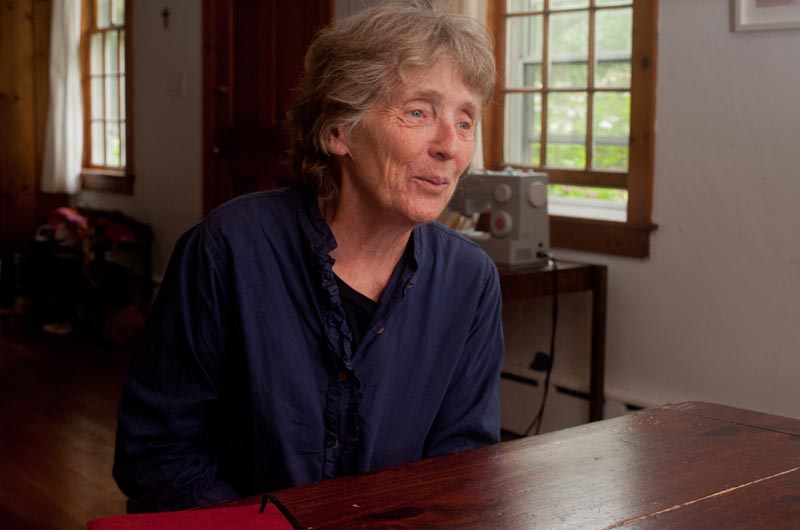
W. S. Merwin

W. S. Merwin [Stanford]

from W. S. Merwin's The Vixen:

Garden

When I still had to reach up for the door knob
      I was wondering why the Lord God whoever that was
who had made everything in heaven and the earth
      and knew it was good and that nobody could hurt it
had decided to plant a garden apart
      from everything and put some things inside it
leaving all the rest outside where we were
      so the garden would be somewhere we would never see
and we would know of it only that it could not be known
      a bulb waiting in pebbles in a glass of water
in sunlight at a window You will not be wanting
      the garden too the husband said as an afterthought
but I said yes I would which was all I knew of it
      even the word sounding strange to me for the seedy
tatter trailing out of its gray ravelled walls
      on the ridge where the plateau dropped away to the valley
old trees shaded the side toward the village
      lichens silvered the tangled plum branches hiding
the far end the scrape of the heavy door as it dragged
      across the stone sill had deepened its indelible
groove before I knew it and a patch of wilting
      stalks out in the heat shimmer stood above potatoes
someone had cultivated there among the stately nettles
      it was not time yet for me to glimpse the clay
itself dark in rain rusting in summer shallow
      over fissured limestone here and there almost
at the surface I had yet to be shown how the cold
      softened it what the moles made of it where the snake
smiled on it from the foot of the wall what the redstart
      watched in it what would prosper in it what it would become
I had yet to know how it would appear to me

Saturday, October 25, 2014

All Bo Blang


All Bo Blang

all bo blang   bing cho cam   dem ecto fletch
gumble gar   hag inda jer   kuntle   lo medic nudich
om pidge   quag roo slurry   tinker tew
ubble voh   wun xipple   yop zend   ar bilt coo
day emple   foe   gaff her   im jay ky
mutt ning   onk pho quip   rella ruff
sich tin   tess un   vac woo   xtra yum zah

Saturday, October 18, 2014

A Natural History of the Senses


A Natural History of the Senses

— a Diane-Ackerman-inspired cento

in the western idiom
a chord is an idea
budding from olfactory stalks
embodiment of
ten octaves

olfactory regions are yellow
receptors at the base of hairs
the mouth
a plague of mellow apples
yellow fever of butcher shops

constant in our lives
the sneeze is
a greater handicap
than blindness
for whom it fails to ring

when we sing
the landscape kisses
its signature
sensory maps
we are its consciousness

deafness
is the sound that once rang in the sky
at 85% the speed of sound
delicate as a twig traveling
vigilant across a field

pupils dilate
ancestors
ground-up bones
touch as
endorphin levels rise

the sky is the one visual
perfume of healing
tactile vocoder
of a substance
in human embryos

original rosaries were made
from pigeon dung
typhus is said to smell of mice
even crown jewels
are replaced every thirty days

during early afternoons in October
we become nomads
talcy-leaved
bending together
to water vibrations

hand gardening
we sing
the season’s periods of dark & light
our sleep schedule parallels
an earthworm nearby

guided by smell
the duck’s bill
expels air
across
cerebral hemispheres

ethereal, resinous, musky,
minty, floral, acrid, foul
testosterone is at its highest
in Islamic cooking
menses breath is oniony

neurons in the nose
mix rose water & musk into mortar
a clanship of porridge
internal organs don’t
devour their enemies at table

a delicate staple
of only eight molecules
has many pain receptors
sight appears dull
on the battlefield

to move its flying muscles
eat a live goose
measles of freshly plucked feathers
dried-up rose petal hair
be honest in sacred's name

Tuesday, October 14, 2014

Fanny Howe

Fanny Howe [Vineyard Gazette]

from Fanny Howe's Second Childhood:

The Monk and Her Seaside Dreams 

The monk is a single 
and so am I 
but which kind? 

All of them 

from young to wild 
and the boyish one 
(mine) cared for the weak 
until there was no one 
to care for him 
besides an old woman 
who lived as a she.

I became a penitent
sequentially:
first in sandals
then in boots
then with a hood
and bare feet.
Now night-bound, now nude, then old.


·•·

Another brother and I took a train with a view of mountains
floating in water
out of Limerick Junction
to Heuston Station where Wittgenstein
tried to discover emotion.

He hit a horizon.

"Philosophy should only be written as poetry."

·•·

In a Sabbath atmosphere you stand still and look backwards
for time has ceased its labors
and no cattle tremble.
You can contemplate the peripheries
and for a flash see the future as a field in a semi-circle.

Everything is even on the Sabbath. The died and the living.
Each person or place wants you as much as you want another.

·•·

Towards a just
and invisible image
behind each word
and its place in a sentence
we must have been sailing.

Scarcely defended, best
when lost from wanting perfect sense.
But still, recognizable.

Be like grass, the phantom told us:
lie flat, spring up.
Our veils were scrolls
you couldn't walk into
but only mark the folds.

·•·

I've lost my child at the bend where we parted.
We will never come back to that hour.

Let me write about the place again the path so sandy
and the table cloth blowing in a wind from Newfoundland.
It was here it began. She left her bouillabaisse untouched
and headed out on the train.
Sort of, soft, gold at sunset, turrets and sandals
were hard to identify so many copies.
Let me concentrate on ancestral faces
and I will recognize hers
before my powers fail and our DNA has been smeared
on cups and cigarettes, bottles and gloves, bowls and spoons
and replicated, sucked or kissed into the lips of strangers.

·•·

I have to pass through the estuary
to investigate breakdown as a trail of nerve-endings
at the beginning of everything.

Scrapes like threads seeking holes.
It's a strange textile that serves as a road map.

This one did:
its blue led to the edge.

Where could a fabric begin and end except as a running woman
who sews and passes it along?
So I ran with it in my hands.

A kind of eucharist.
No break in its material from the first day on earth
to the Sabbath where all are equal
and the cows covered in sackcloth.

·•·

Where has my mind gone?

The bloody thieves
are very quick.

You may have noticed I'm naked
and sliced by glass.

Soon words will be disappeared
and then the Celtic church
and seven friends
I will not name.

One word that contains
so many:

dearth, end, earth, ear, dirt, hen, red, dish, it and
I must examine each part
then cut the ropes without a heart and set out.

·•·

The slide downhill on my back to a ledge
and the sea out there and a city
to the left of the mud.
The place they call an area
preparing for an earthquake. Under-shade and crowds
of hungry old people lining for bread.
One woman collapsed on her side
and another helped her up
and I was let into the bunker
by the best kind of communist.

There was orange vomit on a large cape over a large woman.

The hills! No bells.
I went down for what reason.
Not to enter a cell.

Luckily no one was white.
We discovered we were in a loft space from the olden days
that I indicated pleased me.
because I couldn't get my body out no matter what.

I paused long enough to encounter
a slender elder with the delicate posture of a Rastafarian.
The people were indifferent as they are to whites but polite.
The lean man showed me the door in colorful clothing.

But there was a huge blast from the building beside us
And we ran up rickety stairs to look at what
was now a structure speared with broken glass and stone.
A worker was already being transported on a stretcher.

We looked around at the mess then went inside to discuss
our love of failures, every one of us.

·•·

I hauled so many children after me
with ropes and spears and nets
like sea-creatures that others would eat
without them I have no purpose.

As in the Gospel account, I believed in their belief.
But now there would be what? For he, the little one,
was kneeling and saying, You must run.

The lover I still loved stayed near the door
so I raced off, you stood, when the police came
seeking coherence in everything.

The total machine of retribution presses on.
Regardless of a prayer or what a person did.
This is incredible.
We're breaking up.

·•·

A Trappist led me around as one of him
to a ship heading for the country where they edit the best films.
There was a city on deck: residential with pleasing evening trees
and then a downtown area until we couldn't tell the suns
from the portholes on board.

The ship would transport us to a staging dock in Iona.
I would lose my luggage from the twentieth century
(though its particles and buckles were forged in eternity)
and make my private vows to the creator
in every theater we entered.

·•·

Together we traveled in a boat as it filled with night-water
from the bottom up.
By night-water one means fear.
So the refilling is adding a sting to the salt.

Living naked
still leaves you covered

by a surface of wood, feathers, fur or skin.

Bare skin, blue skin: a muff of lambskin
over the ears where the thief can get in.

It's lucky the mind freezes before the heart.

·•·

Back there is the string of mountains your uncle painted
and you lost. Out there is the clotted cream
on a raspberry tart that he couldn't finish.

There is the goose and the blackbird, the brindled donkey
and the trap. They stand on the thin black thread of your lineage.
Your scissors are split, your fiddle is cracked, its strings are thin
and your mouth is dry, your clothes American.

No more rush of notes as if a window is open inside.

Only if you are insane or asleep
and the gods and animals
pound their way in
on a divine night wind.
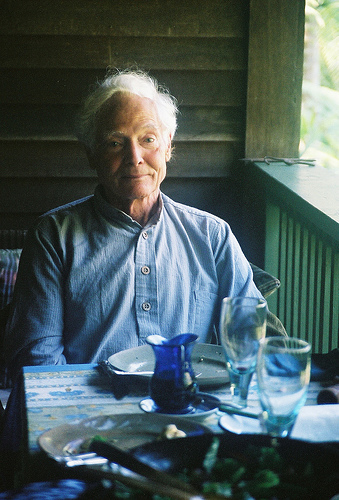
Friday, October 3, 2014

Susan Sontag

Susan Sontag [Tanya Pretorius]

from Susan Sontag’s On Photography:

it was [Walter] Benjamin’s conviction that reality itself invited — and vindicated — the once heedless, inevitably destructive ministrations of the collector. In a world that is well on its way to becoming one vast quarry, the collector become someone engaged in a pious work of salvage. The course of modern history having already sapped the traditions and shattered the living wholes in which precious objects once found their place, the collector may now in good conscience go about excavating the choicer, more emblematic fragments. . . .

Benjamin’s ideas are worth mentioning because he was photography’s most original and important critic — despite (and because of) the inner contradiction in his account of photography which follows from the challenge posed by his Surrealist sensibility to his Marxist/Brechtian principles — and because Benjamin’s own ideal project reads like a sublimated version of the photographer’s activity. This project was a work of literary criticism that was to consist entirely of quotations, and would thereby be devoid of anything that might betray empathy. A disavowal of empathy, a disdain for message-mongering, a claim to be invisible — these are strategies endorsed by most professional photographers. The history of photography discloses a long tradition of ambivalence about its capacity for partisanship: the taking of sides is felt to undermine its perennial assumption that all subject have validity and interest. But what in Benjamin is an excruciating idea of fastidiousness, meant to permit the mute past to speak in its own voice, with all its unresolvable complexity, becomes — when generalized, in photography — the cumulative de-creation of the past (in the very act of preserving it), the fabrication of a new, parallel reality that makes the past immediate while underscoring its comic or tragic ineffectuality, that invests the specificity of the past with an unlimited irony, that transforms the present into the past and the past into pastness.

Like the collector, the photographer is animated by a passion that, even when it appears to be for the present, is linked to a sense of the past. But while traditional arts of historical consciousness attempt to put the past in order, distinguishing the innovative from the retrograde, the central from the marginal, the relevant from the irrelevant or merely interesting, the photographer’s approach — like that of the collector — is unsystematic, indeed anti-systematic. The photographer’s ardor for a subject has no essential relation to its content or value, that which makes a subject classifiable. It is, above all, an affirmation of the subject’s thereness; its rightness (the rightness of a look on a face, of the arrangement of a group of objects), which is the equivalent of the collector’s standard of genuineness; its quiddity — whatever qualities make it unique. The professional photographer’s preeminently willful, avid gaze is one that not only resists the traditional classification and evaluation of subjects but seeks consciously to defy and subvert them. For this reason, its approach to subject matter is a good deal less aleatoric than is generally claimed.

In principle, photography executes the Surrealist mandate to adopt an uncompromisingly egalitarian attitude toward subject matter. (Everything is “real.”) In fact, it has — like mainstream Surrealist taste itself — evinced an inveterate fondness for trash, eyesores, rejects, peeling surfaces, odd stuff, kitsch. Thus, Atget specialized in the marginal beauties of jerry-built vehicles, gaudy or fantastic window displays, the raffish art of shop signs and carousels, ornate porticoes, curious door knockers and wrought-iron grilles, stucco ornaments on the façades of run-down houses. The photographer — and the consumer of photographs — follows in the footsteps of the ragpicker, who was one of Baudelaire’s favorite figures for the modern poet . . .

What is true of photographs is true of the world seen photographically. Photography extends the eighteenth-century literati’s discovery of the beauty of ruins into a genuinely popular taste. And it extends that beauty beyond the romantics’ ruins . . . to the modernists’ ruins — reality itself. The photographer is willy-nilly engaged in the enterprise of antiquing reality, and photographs are themselves instant antiques. The photograph offers a modern counterpart of that characteristically romantic architectural genre, the artificial ruin: the ruin which is created in order to deepen the historical character of a landscape, to make nature suggestive — suggestive of the past.

The contingency of photographs confirms that everything is perishable; the arbitrariness of photographic evidence indicates that reality is fundamentally unclassifiable. Reality is summed up in an array of casual fragments — an endlessly alluring, poignantly reductive way of dealing with the world. Illustrating that partly jubilant, partly condescending relation to reality that is the rallying point of Surrealism, the photographer’s insistence that everything is real also implies that the real is not enough. By proclaiming a fundamental discontent with reality, Surrealism bespeaks a posture of alienation which has now become a general attitude in those parts of the world which are politically powerful, industrialized, and camera-wielding. Why else would reality ever be thought of as insufficient, flat, overordered, shallowly rational? In the past, a discontent with reality expressed itself as a longing for another world. In modern society, a discontent with reality expresses itself forcefully and most hauntingly by the longing to reproduce this one. As if only by looking at reality in the form of an object — through the fix of the photograph — is it really real, that is, surreal.

Tuesday, September 23, 2014

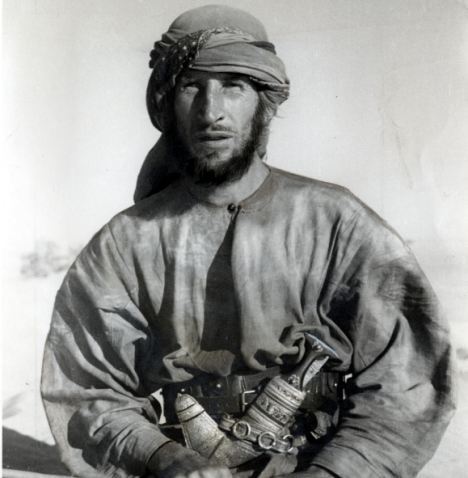
Wilfred Thesiger

Wilfred Thesiger [dogwoodfamily]

from Wilfred Thesiger's Across the Empty Quarter:

Later Musallim and al Auf argued how far it was from Mughshin to Bai, where Tamtaim and the others were to wait for us. I asked al Auf if he had ever ridden from the Wadi al Amairi to Bai. He answered, 'Yes, six years ago.'

'How many days did it take?'

'I will tell you. We watered at al Ghaba in the Amairi. There were four of us, myself, Salim, Janazil of the Awamir, and Alaiwi of the Afar; it was in the middle of summer. We had been to Ibri to settle the feud between the Rashid and the Mahamid, started by the killing of Fahad's son.'

Musallim interrupted, 'That must have been before the Riqaishi was Governor of Ibri. I had been there myself the year before. Sahail was with me and we went there from . . .'

But al Auf went on, 'I was riding the three-year-old I had bought from bin Duailan.'

'The one the Manahil raided from the Yam?' Bin Kabina asked.

'Yes. I exchanged it later for the yellow six-year-old I got from bin Ham. Janazil rode a Batina camel. Do you remember her? She was the daughter of the famous grey which belonged to Harahaish of the Wahiba.'

Mabkhaut said, 'Yes, I saw her last year when he was in Salala, a tall animal; she was old when I saw her, past her prime but even then a real beauty.'

Al Auf went on, 'We spent the night with Rai of the Afar.'

Bin Kabina chimed in, 'I met him last year when he came to Habarut; he carried a riflt, "a father of ten shots", which he had taken from the Mahra he had killed in the Ghudun. Bin Mautlauq offered him the grey yearling, the daughter of Fahra, and fifty riyals for this rifle, but he refused.'

Al Auf continued, 'Rai killed a goat for our dinner and told us . . .', but I interrupted: 'Yes, but how many days did it take you to get to Bai?' He looked at me in surprise and said, 'Am I not telling you?'

Monday, September 22, 2014

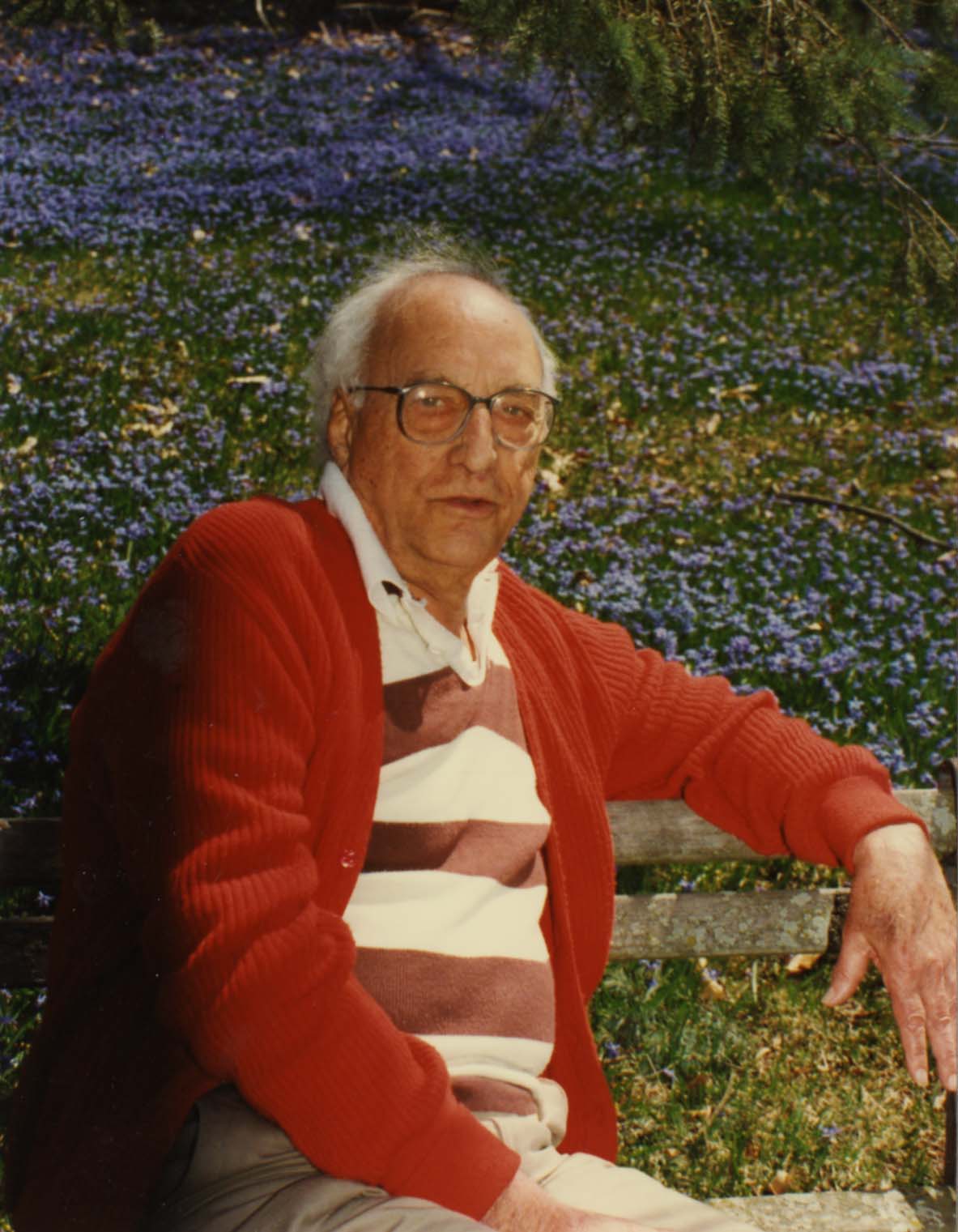
William Bronk

William Bronk [Vassar]

from William Bronk's Vectors and Smoothable Curves: Collected Essays:

Copan: Unwillingness, the Unwilled

What do we want? Say everyone were healthy and beautiful, were rich and together and would never die: well, hardly. But that or something like it had seemed to be what we want. Just the same, any increase in personal favor, relief from some particular ailment, or to live if only a little longer, — these partial benefits seem good. But, in either case, it is the imminent certainty of deprivation, whether whole or fractional, we stand on. How should we seem to want these things without that certainty?

So; what do we want? Sometimes, to go, in other ways also, counter to the truth, to mark ourselves off from what there is around us, and make that subject to our will: to be masters of some sort, of the political-military sort that leaders and conquerors are, or of the intellectual sort that devises a rationality strong enough that it seems to impose that rationality on what there is. But what there is continues outside and beyond any rationality imposed on it, and political-military mastery is brief and apparent. The notion that [sic] man's condition can be stated in such a way that there is, for one thing we, and for another, our environment which we master or fail to master, is in itself a wrong idea. It might be said that we are everything, that the only reality is internal, there is nothing outside of us. Or, it might be said that we are nothing, have no real being, that there is only something else whose existence ignores us, and asks us for nothing. The two statements seem to be opposed but may not be. They are equivalent, at least, in denying the duality. Whatever there is, if there is something, we, if we are, are part of it. There are not two realities: [sic] man and his medium, of which one is the subject and one the object. It is only by a willful act in the face of the truth that we become an entity separate from what there is around us; and how much the more willful it is to presume to master what we have marked ourselves off from.

There is something which is and we are not separable from it. Then, if we want something, it is something wanted through us; we are the instrumentality of a desire which it would not be quite accurate to call external because we are part of the wanting, but neither is it right to think it personal. If something is wanted, we feel the want but we are not apart in wanting it. It is always tempting though to transmute the something wanting into personal terms, to look for, or even to find, our own satisfactions as though that were what was wanted, as it proves not to be. At any rate, our personal satisfactions, once had, often seem nothing; whatever it was that was wanted, it wasn't that, and we are puzzled by trophies that seem to have been won by someone we don't even remember. Not always though.

The attempt to put personal desires in place of the general want which we feel, is a simplification, and makes the problem of desire appear to be something we could hope to solve. Isn't it, at bottom, a trial to be something of our own, a separate part with its own desire? It is interesting that our separation is rarely a branching and gradual departure, nor is it a process of development by which inherent and hardly perceptible tendencies express and realize themselves. It is a removal to an existent position as though it were transferable, as though we were molten and gave ourselves into some mold that we saw in order to borrow the form of that mold. We might make much of the implications of external labels which are neither natural nor inherent — of name and place and time and function. It is the somewhat removed mold, often, that seems to attract us, though sometimes the removal is only the distance from actuality to pretension. It may be that the attraction of hypocrisy is only the unnaturalness of the position which it offers, a position which is well-defined because of its falsity. We are uncertain where something real begins or ends, or of its nature; the false can be sharply defined however hollow it is or however little it means. The human situation seems less a come-as-you-are party than a party to which we are bidden to come as our favorite character and, though we are sometimes cheap or shy, we do fairly well. We put on the costume and badges, the mental attitudes, the facial and vocal expressions of something, of someone. Such an action gives shape and clarity to our desires, gives them poles and simplicity; it sets us up as some sort of marked-off existent. It is of course evasive. It is hard to face how insanely evasive until we have watched the fatal despair with which we fight off the loss of an assumed identity. An assumed identity is made from appearances and lets us be nothing and yet appear to be something. We don't so much want to be something as we want to be allowed to look like something, to be granted general recognition — even acclaim — as what we pretend to be, to win the prize for Best Costume. A declared identity is an assertion of independence, often an aggressive and defiant assertion as though our separate person were a prime value; and it is an avoidance at the same time of any person we might have inside lest it look like the nothing it fears to be. Avoidance, removal, displacement: these seem to be the center of our wanting to be something, our assumption of an identity on our own, as though in order to be something it were necessary to move away, to break some existing connection whatever we sense it to be. But it may be the other way: that we want to be something in order to justify our real desire which is to move aside. There are societies where it is recognized as essential to have an assumed name under which to function and to conduct a mature life, suppressing a real name such as it might be. In certain ways, our own society admits the same need.

We may well be nothing or if not, are tenuous and frail. Resoluteness of being which seems to make us something acts to block our emptiness into which something which is might flow. If we start playing a role and let our energies and devisings embellish and serve that role, we are reflecting, however in error, the flow into our emptiness of energies and intentions from what seems outside, but which finds some sort of reception in us. Something enjoys being. Our imitation in our own right, of being, may pass for pious homage or a satisfaction at least, of those self-generated desires. We envy actors who have a role into which their passions can be directed, or else we envy the dead, that melted flesh no longer faced with the question.

If something wants through us, if we are the instrumentality of a desire whose source is not internal, then to interpose our own will or personal desires is an avoidance of reality, and the wants which our willfulness includes are irrelevant wants and may be dismissed as not important, as not what we want, no more than we want, as we seem to, an endless life, endless wealth and fairness and company. Order and security, to be caressed and honored and to caress and honor in turn — we seem to want these things, but in order to make us a separate enclave, a refuge apart from what may be wanted through us. If we are not to falsify life, but to have it for what it is, we must leave ourselves open to it and undefended, observant of what may happen, since our private will is not relevant and we are not capable of apprehending or assisting any other will, and what we observe and feel is perhaps less will than being and the nature of being. We have made up complicated frameworks of activity and attitude on the foundation that somehow we grasp what may be wanted from us, some challenge or imperative. The challenges and imperatives may not be anything like each other in any respect except in this: that they assume our receiving them. But in experience (and on the contrary) nothing is revealed to us of what our nature may be, or of what we must do. Nor, though we spy on it most diligently, do we learn things of consequence about whatever else there may be besides ourselves. We have no inkling of its wants or purposes or whether it has any. There may be some divine or historical or biological or evolutionary determinism and we may be wholly subject to it — it may want something of us — but it is without our consciousness, and we cannot bring our wills to consonance with it, not knowing what it is. I think we are totally unable to affect it: that any action of ours which is contrary is null by its contrariety, and any consonant action is an action not by us but through us, not by our will or any necessity. We have supposed that there are wants and purposes but it seems likely that none exists.

How empty all those schemes are, and they are very many, which propose our necessity or which propose that we need to do this or that in order to assert or maintain our own existence, or to realize what may have been intended for us. Noting that we do devise as a convenience a kind of machinery of social and political and economic organization, we project that a more searching and more diligent devising would make use of what there is and organize reality into the mechanism. Noting that we do personify ourselves, that we devise a characterization by means of, say, the superego, or historical imperative, or evolutionary vectors, moral precept, or what we will, we project that our courage and intelligence have the means to produce in our own person the fulfilled and realized [sic] man who has dared to embody reality in himself, not flee from it, and so has permitted reality to have real being. But what there is — we are part of what there is — is what it is regardless of us. It has real being without our help. We are whatever we are, squirm or resolve what we will to avoid it. We can make as though to run away and leave only a token of ourselves behind, but the token we leave behind is what there is. Anything else is pretense and subterfuge. We need not want anything; nothing needs us to want.

There are things which we feel, certain angers, rejoicings, fears. These feelings astonish us. Set beside our expectation of a real world, they seem not to have the habit of reality. They seem unrelated, and there is a lapse of time before we take them as real in the absence of a more expected reality. We learn at last, and accept the learning at last, that these feelings come to us without our willing or acceding or inventing. They come from beyond our skin like approaches to us, like messages; and we respond, trembling and shaking, or vibrating in tune as though we were instruments a music were played on and we arch and turn to have the contact closer. Our responses are presences that tower around us, seemingly solid as stone.

Friday, September 19, 2014

Rigoberto Gonzalez

Rigoberto Gonzalez [Numéro Cinq]

from Rigoberto Gonzalez's Black Blossoms:

Floricuatro

          Baby's Breath

Every birthday you eat a year off your mother's life — your mother plucked
in parts, petal by petal like the schizophrenic daisy, stares down as her heart

bubbles out vulnerable as yolk. The needle-thin rays of the sun
press against her every morning when she opens her mouth to yawn

and exposes the waking weevil of her tongue. What is it about mothers
that makes them so mortal? Is it that every mother bleeds? Is it that every

mother weeps into the jaundiced rags of her hands after the bodies she hums
into the world exclude her? Yes, you'll leave her, first memory of your gums.

She slumps among the furniture and marvels at the temporary power
of populating houses. Skin and wood, these are the archives of your hours.

The floor maps footsteps with cracks on the tile. Your mother records
the sounds of her sleepless nights. This is what keeps her alive

for now: the sleepwalk through the walls as she lactates through her robe,
your baby breath settling like the snowdrift in a dusty water globe.


Monday, September 15, 2014

Alberto Ríos

Alberto Ríos [ASU]

from Alberto Ríos 's The Smallest Muscle in the Human Body:

Common Crows in a Winter Tree

The birds, they make this happen.
In the sky with nothing else to do, a Saturday,
The slow knee-bend of an afternoon, out there.

I have seen them myself.
The birds caw down a rain, tease it
To a hard ground of grass and flat and edge.

The birds, they cannot stop — they are birds.
They play when they do it. They don't mean it
When the rain reaches bottom.

But there is so much rain, and it listens
So well. Who would not, like the birds,
Try other things, try to train this water

To tricks, and to laughter? Circus
Ringmaster to a thousand lions of water:
Rain do this: And again: And now this.

To get away from the birds, the rain tries a mask:
It becomes snow, a show of wings, the flakes
Drunk moths in an aimless, cool wander.

Then it is ice, a trick again, rain

Turning into tiny fists without skin.
Hailstones, each a clutch of finger-bones,
Brittle, as much dry as wet. Rain to snow,

Then ice, then bone. Then more,
To skulls, and teeth, breaking against the earth
In a white fireworks of cruelty.

The birds, they get carried away, they cannot
Do a small thing or make a quiet noise.
But the birds do not mean it, this

Teasing of the sky to tears. They are birds —
They caw at anything, at little boys
Walking, boys who will look up.

And a loud caw, it will draw the boys, lift them
A little, until they cry. The birds
Do not mean to frighten,

But neither do they mean not to frighten,
Not to lift a boy into a branch
The way boys will go, lift a boy to a second

Branch, higher. The boys will go.
They cry at first, but they rise.
They are boys, and these are birds.

And the rain is falling. It makes a sound
Until snow, which is itself a sound,
Bigger and smaller than the moment before.

The boys come down from climbing, the boys who were lifted
Into trees, the boys who were birds.
The birds make their noise again, at something else.