Saturday, January 17, 2015

Andrew Grace

Andrew Grace [Shenandoah]


Grant Wood, oil on hardboard, 1934

1.

Noon. A thresher waits
to wash the debris from his face into
a stone bowl. His hair is stiff
with lice. A rooster
missed its hour, tries
to scream the sun back down; it is Iowa,
1892. A draft horse the color
of zinc tongues it own shadow.
The thresher is about to join a table
of men — fourteen of them, as in the Last Supper —
in the house
for lunch. The string of Xs
formed by the backs of the men’s overalls marks a negation.
They lift the offering to their
mouths: blood, flesh;
coffee, rabbit.

2.

Their minds are on process:
thrash, shake, winnow. Two thousand
bushels bagged in a pigeon-crusted loft.
Two thousand to go.
Man in the hopper,
man on the stack of moth-gutted
wheat. Two horses lashed to the ends
of a rafter, the drugged circumference
of their labor turns the machine.
The man in the hopper
pushes wheat into a chute, which separates
grain from chaff. A boy clears the waste.
A shroud of white moths rises
from his arms.

3.

The thresher’s forehead is the color of torn roots, his face
and neck empurpled by sun, spelled only by quick
reshufflings of cirrus.
He is not
unhappy, only
afflicted by variables. Hail, rust,
blight, eyespot,
black chaff,
pink seed, flood, endless depth of sky, endless dark of his bedroom
in which the eye drowns.

4.

Ornate wallpaper, the smell of cooked meat
like the flush of warmth back
to a cold extremity:
women bring bowls
to the table, men in
fellowship with men as a reward for labor.
But for every spotless rack
of cerulean china
there is a night
when the rooster
conjures a false dawn;
in its intervals
silence rages in the English garden;
candle flames like commas
prolong the dark. This is why
aprons are bleached daily,
why the barn is scrubbed as reclamation from
scat and sun, why
each man asks for more meat, more labor
as if bodies
are made to be consumed.

5.

To chew the roots of cowbane is a way out. Laudanum under
the sink is
a way out. Also, the concept
of being a metaphor
for wheat:
when torn open: raw, prone material
that broken across
a machine or a winter
is malleable to
any use; touch me and blue shale beneath
us is tamped an inch
towards the underworld.
What if they did not want
a way out? Night’s oaks swallow wrens, so dark
the barn is imperceptible. To sit at that
table emptied of its men is to
learn to take solace in what pours
from the window’s open mouth.

6.

The last man raises
his face from the bowl. The prairie
is both hurtling and
standing still. It will
not rearrange itself no
matter how deeply he scrawls his attention
over it. He takes in the thick
concussions of light.
He is drawn back to the barn
and past it, where pheasants explode
from the ditches. He is not hungry
anymore. Someone will take his seat
at the table. Someone will lower their head
and ask the Lord to be made
more bare to the sun.
A clot of moths unravels
across the man’s eyes. He asks for no other
veil over the stillness.
And the Lord
provides.

Saturday, January 10, 2015

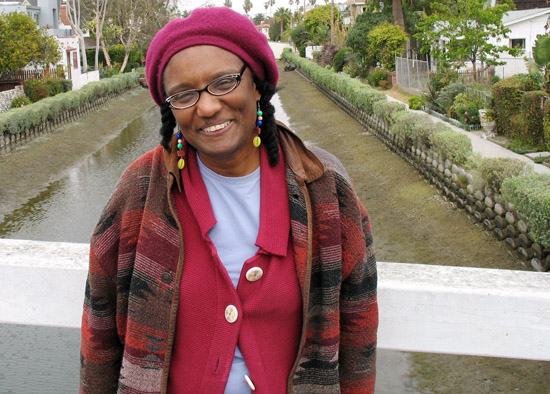
Harryette Mullen

Reading Jayne Cortez

I’m using my plain brain to imagine her fancy cortex. As if my Lowly mollusk could wear so exalted a mantle as her pontifex Pallium. As if the knots and tangles of my twisted psyche could mesh with her intricate synaptic network of condensed neural convolutions. As if my simple chalk could fossilize the memory of her monumental reefs of caulifloral coral. As if my shallow unschooled shoals could reckon the calculus of her kink’s brainwave tsunami. As if the pedestrian software of my mundane explorer could map as rounded colonies the terra incognita of her undiscovered hemispheres. As if the speculative diagnosis of my imaging technology could chart the direction of her intuitive intellect. As if the inquisitive iris of my galaxy-orbiting telescope could see as far as her vision. As if the trained nostrils of my nacro-bloodhound could sniff out what she senses in the wind. As if my duty-free bottle of jerk sauce could simulate the fire ant picante that inflames her tongue of rage. As if the gray matter of my dim bulb could be enlightened by the brilliance of her burning watts. As if her divergent universification might fancy the microcosm of my prosaic mind.


Music for Homemade Instruments

I dug you artless, I dug you out. Did you re-do? You dug me less, art. You dug, let’s do art. You dug me, less art. Did you re-do? If I left art out, you dug. My artless dug-out. You dug, let art out. Did you re-do, dug-out canoe? Easy as a porkpie piper-led cinch. Easy as a baby bounce. Hop on pot, tin pan man. Original abstract, did you re-do it? Betting on shy cargo, strutting dimpled low-cal strumpets employ a hipster to blow up the native formica. Then divided efficiency on hairnets, flukes, faux saxons. You dug, did you re-do? Ever curtained to experiment with strumpet strutting. Now curtains to milk laboratory. Desecrated flukes & panics displayed by mute politicians all over this whirly-gig. A well known mocker of lurching unused brains, tribal & lustrous diddlysquats, Latin dimension crepe paper & muscular stacks. Curtains for perky strumpets strutting with mites in the twilight of their origami funkier papoose. Thanks for patting wood at flatland. Thanks for bamboozle flukes at Bama, my seedy medication. Thanks for my name in the yoohoo. Continental camp-out, percolating throughout this whirly-gig on faux saxon flukes. Artless, you dug. Did you re-do?


Tuesday, January 6, 2015

But we are a house


But we are a house

foundered on a hillside
bottomed in a creek & crowned
by century redwoods. We are walled
w/ eyes recording weather,
dawn, Anna's hummingbirds & silver
fungi, fox & coyote, tomato-
gobbling fawn w/ parent
(parent another kind of house).

We don’t recall the hares &
Germán’s dogs in fruitless chase,
a hundred parrots grazing
out the north window of that red-roof
pale green house, vacant now
& likely wind burned, dust bunnied,
the dying willow once hung
w/ parrots a ghost beside
a second-story stained-glass eye
incandescent w/ desire to gain
someone new’s affection.

                                          But here
in what you call present time we are
a blue-roof pale brown, say it — beige
call it bone house. Is it so unlikely
you can learn to love us?

Monday, January 5, 2015

two coyotes

coyote @ UCSC [Santa Cruz Pumas]

two coyotes cross
the driveway, eyeball the cat
disappear downslope

Sunday, January 4, 2015

Sixteen Sections


falling stars reckon
a rabbit moon kin or foe
clouds may discover

according to the 11th century Ehr-Ya Encyclopedia, tyvm Philip Whalen, the world divides into sixteen sections, i.e.:

kin,
houses, utensils,
music,
heaven, earth,
mounds, hills,
waters,
plants, trees,
insects,
fishes,
birds,
wild
& domestic animals

a cat down a well
is not a drink but a dream
of drink, a bad spill

Saturday, January 3, 2015

No Bone


No Bone

My thumb joint's becoming a natural
marshmallow, seamed at the wrist
above a neighborhood weave,
natives jockeying for best place,

muscling into a new interior
left by a bone drilled & joysticked
out of mosaic, its grout extruded
by decades of tool use or traces

of faulty DNA. Reconstruction’s a race
not to mimic the joint but conjecture
by tissues willed to regenerate,
to stuff life in the empty space.

Friday, January 2, 2015

the prisoned weight


the prisoned weight of
my thumb, wound & bound, boarded
stay at home Gitmo

Thursday, January 1, 2015

Sunday, December 21, 2014

Roger Reeves

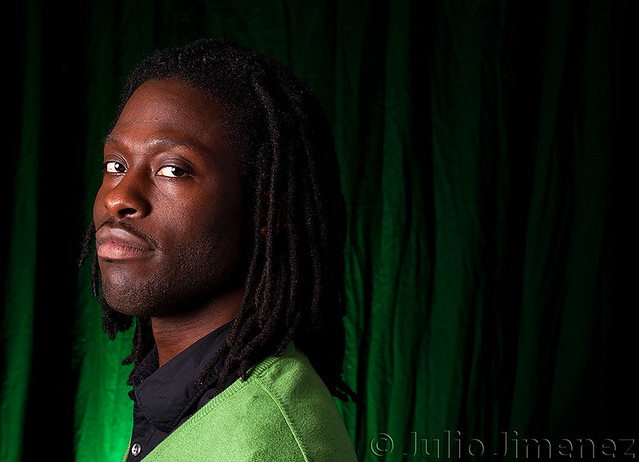
Roger Reeves [Julio Jimenez]

from Roger Reeves's King Me:

Self-Portrait as Vincent van Gogh in the Asylum at Arles

The moths in the orchard squeal
with each pass of the mistral wind.
Yet the reapers and their scythes,
out beyond the pear trees, slay wheat
in sure columns. Christ
must have been made of shocks
of wheat. When they lashed him,
four bundles of fine yellow burst forth
from each welt. And the women,
tarrying as they do now behind the swing
and chuff of the reapers' blades,
gathered and plaited the stray pieces
of wheat falling from his hips into braids,
long braids that would bind a tattered sail-
cloth over his yellow mouth, yellow feet.
Oh to be bound by one's own blood
like a burlap sack cinched around the neck
with a leather belt. Father, forgive me
for the moths shrieking in the orchard
of my mouth. Forgive the rattle and clatter
of wings inside the blur of my brain.
Even if these iron bars queer a field,
queer a woman standing too close to a reaper's blade,
a half-moon hung and wholly harsh,
even if this woman, burdened like a spine
carrying a head and a basket of rocks,
forgets the flaw of a well-sharpened tool,
let her not mistake my whimper and warning
for the honk of a goose in heat. Father,
she is not made like our savior,
of straw, of a coarse tender. Nothing will stop
when her blood runs along a furrow.
The sun will not sag with a red scowl.
The field will not refuse water, Father,
I am unsure of what I am —
a fragrant mistral wind or a pile of moth's heads
at the foot of a pear tree. Father,
give me a scythe. Father, let me decide.


Every Casket, a Pause

Leaking white into the plum-crushed tunic of night,
the geese drop their tiny anvils onto the lake,
our heads, as if your brother floating below our boat
weren't forcing enough silence into our throats.
Should I gather and burn what falls? What beast
should I press to your back and breast, let suck
at the fine ribbon of grief knotted at your neck?
I have an animal for every occasion. And another
for the occasion after. Our boat tangled in the crown
of a pine. Your hand, hacking at the needles. Too much
blood in the water. Dead Love, Dear Pine Piercing
The Top of This Flooded Lake, who will cut us down,
burn what remains, leave feathers to clot our throat?

Thursday, December 18, 2014

Susan Sontag

Susan Sontag [Architectural Digest]

from Susan Sontag's Antonin Artaud: Selected Writings:


Artaud wandered in the labyrinth of a specific type of religious sensibility, the Gnostic one. (Central to Mithraism, Manichaeism, Zoroastrianism, and Tantric Buddhism, but pushed to the heretical margins of Judaism, Christianity, and Islam, the perennial Gnostic thematics appear in the different religions in different terminologies but with certain common lines.) The leading energies of Gnosticism come from metaphysical anxiety and acute psychological distress — the sense of being abandoned, of being an alien, of being possessed by demonic powers which prey on the human spirit in a cosmos vacated by the divine. The cosmos is itself a battlefield, and each human life exhibits the conflict between the repressive, persecuting forces from without and the feverish, afflicted individual spirit seeking redemption. The demonic forces of the cosmos exist as physical matter. They also exist as “law,” taboos, prohibitions. Thus, in the Gnostic metaphors the spirit is abandoned, fallen, trapped in a body, and the individual is repressed, trapped, by being in “the world” — what we would call “society.” (It is a mark of all Gnostic thinking to polarize inner space, the psyche, and a vague outer space, “the world” or “society,” which is identified with repression — making little or no acknowledgment of the importance of the mediating levels of the various social spheres and institutions.) The self, or spirit, discovers itself in the break with “the world.” The only freedom possible is an inhuman desperate freedom. To be saved, the spirit must be taken out of its body, out of its personality, out of “the world.” And freedom requires an arduous preparation. Whoever seeks it must both accept extreme humiliation and exhibit the greatest spiritual pride. In one version, freedom entails total asceticism. In another version, it entails libertinism — practicing the art of transgression. To be free of “the world,” one must break the moral (or social) law. To transcend the body, one must pass through a period of physical debauchery and verbal blasphemy, on the principle that only when morality has been deliberately flouted is the individual capable of a radical transformation: entering into a state of grace that leaves all moral categories behind. In both versions of the exemplary Gnostic drama, someone who is saved is beyond good and evil. Founded on an exacerbation of dualisms (body-mind, matter-spirit, evil-good, dark-light), Gnosticism promises the abolition of all dualisms.

Artaud’s thought reproduces most of the Gnostic themes.

Monday, December 8, 2014

Saskia Hamilton

Saskia Hamilton [Star Black]

from Saskia Hamilton's Divide These:

Year One

If the eyes move to the right: no.
If they stay in the center: yes.

The left is for listening because they sit
on the left side of the bed.

Only the eyes move. Someone
swabs her lips.


The first nurse is too cheerful.
The second does not know

how to speak to the speechless.
The third strokes her arm:

something settles down:
one lying, one sitting,

one in the doorway.

Sunday, December 7, 2014

Remembering Dreams


A flash of green,
the face of someone mouthing words
you can’t hear or remember —
sometimes all that returns is the curve
of the plank bridge you cross, the wonder of
outstretched wings, your body
riding the air between.

Nights, you lie impatient
for sleep, for noises to jolt you awake
mid-dream — the sound of the child
rising from her bed at the foot of your bed,
staring out the window, then peering at you,
your closed eyes, making sure you’re
still here, the child not knowing
you are awake & listening.

You wait for reruns —
the dream of the lion, the snakes
surrounding the bed, the long corridors,
pitched ramps, stair steps
hollowed by boot soles
leading you higher & higher to room after room,
family & roommates, always
the old house.

You wait for the rare dreams
where your mother is alive
& going her patient way —
being a mother is learning how to wait”
she would say at the doctor’s office,
at piano lessons, & afterward waiting alone
the rest of her life for letters & calls, waiting
through the long dream of her death.

Before first light
you wait & listen, dreams gone by
except in bursts — one actor
center stage, spots blazing, grease-paint
running, her mouth round & open
she speaks into the memory
of your other world.

Sunday, November 30, 2014

Jan Bolesław Ożóg

Jan_Bolesław_Ożóg [Wikipedia]


Village for a Wedding

Sky like pigeon’s little belly.

Sky like goldfinch egg,
sky like starling’s tune
greenishblue.

But fields like sundrenched sea
where roe-deer bound through oats
like fish through sea of rye.

And the village distant from a hummock
like a chain on a bicycle.

Iris in golden glimmer like pilot-flame.

But trees deeprooted like ponds
of green broth.
But grass like prayers
from lips of decaying willows.

And the village distant from a hummock
harrows gouged by nails
instead of stakes.

Lady bugs slide off lindens,
cockroaches to pick in a kerchief.

In barns peasant gears groan
cranking round the chaffcutter,
and frightened wasps play
like a heathen church at high mass.

Red beaks of carrots
circle higher than storks.

And the power station beyond the village
limping on crutches
like bent herdsman on crook.

Here the morning scented with hemp
saltily with bundle of clover.

Here my beloved hides for the night
safe from the boys in the kneading trough.
But up the ladder to the attic
carrying a measure of rye on his back
like a good husband

Here you are invited to the wedding.

Friday, November 21, 2014

Lisa Jarnot

Lisa Jarnot [John Sarsgard]


Valley of the Shadow of the Dogs

He could be so far outside himself, generating body heat, far from the telephone, in a room, heated, with the outside of his thoughts, turning, with precision, for the reasons he would know, nearer to god and the mountains and the outside of the room, with the chairs, perceived as objects, always slightly passed, looming, on the forefront, like cake, looming, on the forefront, ambitious, like a sumac leaf, lovely, a wing, with wings and made of cake, having counted let me count, one, the ways that there are, unused, potentially useful, held at a distance like a flower filled with tiny bugs, loved and lovely, without raccoons, beside the spiders, smashed on the sides of the forks, lovely the form in the meadow of the shadows of the dogs, howling, reckless, unusual, unfulfilled, with the christmas lights, steady, and how close I am to myself, and how close they are to the sumac leaves, lovely, against the rain, falling out, fully heated, from the inside of his head, with spiders, in a meeting, against the rain, given to this disposition, equally talented, talkative, talking in tongues, beyond the heads of cows, friendly, on the staircase, friendly, where I waited and the city moved, drenched beneath the sumac leaves, having fallen, into the field, where the dogs are looming, in the forefront, in the shadow of the gods, dreaming of being alone, relieved, heated, steady on the trees beside their wings, riding on the backs of all the bears, and the bears, relieved to be the sumac leaves, and the sumac leaves, relieved to be the bears, and the spider, on the plate, relieved to be just so, wanting to be loved, where the city moved, and then I moved, and the pins all moved, out of place, tetanus-like, having syllables, wishing to love, wishing to love the ocean and the ski runs and the sand, wishing to love the sheep, converging, on the frontispiece, having thrown the ball, equally having thrown the ball and having thrown it, into the leaves, near the trees and all the dogs, meditating, on the coffee cups, meditating, on the backs of all the bears.

Sea Lyrics [excerpt]

I am this Santa Ana wind and we are bowlers, we are at the haircut man, I have divulged so little of the avocado dawn, I am waiting to buy coffee near the docks upon the square, I am all the hot dogs and the roof of city hall, I am hardly standing in the kamikaze rain, I am of the new year sober now, I am inside of all the horoscopes at once, I am the rainy part of early fall expecting to go back across the bridges, I am near the greenish plantains down the street, I am the subtler angles of the sunlight from the surface of the moon, I am here to yet predict the dawn, I am getting better like the oceans on the sidestreet, I am surrounded by water, I am walking sideways near the church in Watsonville upon the orange line at Lammas Tide.

Right Speech

Love, which is meaning
compels speech, speech
which is human, compels
mammals, from the trees
of the language of the
mammals, from the mailbox
where they rise, speakers,
hugged close to the
forest fires late at night,
tigers, cicadas, and trees,
name of the one who is love
compels speech which is
meaning from trees to be
mammals, mammalian,
made of music, made of
tigers with the flames,
rising up from the gardens
of the naming of the night,
giant, speaking to me,
content with this, the trees
with tigers and with corn,
the hot spell of speaking
speech, the language laced
with tigers laced with night.

Thursday, November 20, 2014

Claudia Rankine

Claudia Rankine [LA Times]


I know, because I have been told, some people find The End of the Alphabet to be something other than accessible. This, of course, was never my intention. I wanted only to distress the reading experience so that words were no longer markings to be skimmed over towards the close of an expected narrative. The idea was that a word, any word, would cast its layers of meaning toward an emotional field that was triggered by certain unexpected juxtapositions on the page. The reading experience then would be a journey into a process outside of the narrative plot-driven arc. In this sense I wanted an end to thought as I encountered it in narrative poetry. An end to clarity, however, was never my intent. Always we were meant to come up, to arrive at another mode of expression, for it seemed to me that language could be turned toward rendering an atmosphere, a feeling of flux and desperation, which seems the point of autobiographical, confessional poetry anyway. You know what I mean, people talk a lot and what are they saying beyond, we are not as we “are living” ourselves to be.


Overview is a place

Difficult to pinpoint

fear of self, uncoiled.

specter unstrung. staggering stampede. Which
sung? left the body open for the moon to break into,
unspooling disadvantage.

Give a thought, Jane: Did filth
begin in conversation? drag
the mood through before escaping the ugliness. Not to

dwell on but overhear footsteps again
approaching: immured,
not immune, then dumdum

bullet templed, rip the mind out. go ahead.

*

Dawn will clear though the night rains so hard. Rain

and Jane mix and mixing up, thinking shore but hugging floor.
What Jane must substitute for this year’s substitute
for a mind intact? fire?

its greediness egged on, flame after flame
uninvolved
but still fueling the shifting onslaught.

Gray Jane
emphasize otherwise, not the eyes
but the cheek to the pillow. Bundle up and sweep

bare the mind. Land its ooze
at some other gate, soften
dead wood. Sea smoke, drizzle, distance. The moment

of elucidation snipped its tongue, its mouth water
dried out —
thought-damaged throat.

*

Remember a future
from another dream
and hold on. open your mouth

close to your ear: fear
in sanity lives. anatomy
as dissonance,

vertebral breaking. In spite
of yourself.
rising, the mercury

reaching out
to fever. fire. all your civilized
sense, Jane, disabled.

*

Assurance collapses naturally
as if each word were a dozen rare birds
flown away. And gone

elsewhere is their guaranteed landing
though the orphaned wish
to be happy was never withdrawn.

Do not face assault uncoiled as loss,
as something turned down: request or sheet. Pray
to the dear earth, Jane, always freshly turned,

pull the covers overhead and give
and take the easier piece.
to piece the mind.

to gather on tiptoe. Having lost
somewhere, without a name to call, help
yourself. all I want.

Victor Hernández Cruz

Victor Hernández Cruz [Butler MFA]

from Victor Hernández Cruz's Maraca: New and Selected Poems 1965-2000:

Mesa Blanca

If I were writing on rock,
It would be the wind of the year
That caressing me will make
Me aware of the shadows on
A distant stone —
That signifies an eclipse
On some unseen distant roof,
From where in the form of
A kite a diamond leaves for heaven.

It would be that sound that I would
Make into a face,
Present it at the banquet of those
Who came lost on the boats
Punctuate on key
A coco-net of cybernetic eyes
Transmitting from the beach.

The sea a rush or mists,
Christ carrying the cross of Castile
Soldiers laundering heads of crushed guava
Have popped out of there
Salty like bacalao which here has been
Fricasseed with calabaza,
So we have to church the word
Mestizo
Half and Half —
So that textbooks claiming total
Taino vanishment
Should four pages later erase
The word Mestizo,
With the same mouth they say we are,
Was Webster wasting his time:
"mes-tiz-o [Sp. fr. mestizo, mixed, fr. L.L. mixticius]
a person of mixed blood; specif: a person of mixed
European and American Indian ancestry."

The sensational things coming together,
Of the Arawak-Taino
The only thing that remains is
What is not gone:
The looks,
The gestures,
The thoughts,
The dreams,
The intuitions,
The memories,
The names of fruits,
Rivers,
The names of towns,
Vegetables,
Certain fish,
The gourd making music
In the mountain,
The maraca making feet
Areyto dance,
And this cigar between my fingers.
More than half is the ground itself
The rock in my hands was in Arecibo's palm.
This is not to disagree with the
Anthropologists of text
But merely to reaffirm what they mean
When they don't say.

This paper which was a tree
is crying for its leaves
That's the route of your mind
To dance its branches,
For that canopy red flower
Of the Antilles,
So high up in air spirit,
Flowing right through that bark,
A water shaft,
A city of bamboos
Liquefied fructus,
Humid swamp for that
Night frog.
To sing without rest
Till the roosters brush their
Beaks with the first
Arriving morning light.

The joyful noise of the night
What might be coming from lips,
Or the rubbing of legs
The full harmonic tropical berserk
Begging for love
In abundance
Not one thousand
But one thousand and one
Lights of cucubanos,
Morse-coding lovers,
That come down,
meow not now
Of the cats —

For that's the flavor,
Within the opening of the
Two mountains,
A glance following the
River
That goes to fish its memories,
Scratched one next to the other
Like the grooves of shells,

To think that no one believes
We are here.
The past in the smoke of the cigar,
Bringing the future in-formation.

. . .

The caciques were descendants of hydrogen
The sun hung upon their chest
Candles near the Indian Head
Simaron rockets
They passed singing through
Mavi trees and rock —
They migrate with the blood
And filter through the bricks
Going toward feathers —
In the frozen ice a gold head
Ring upon a finger calls
And the water boils as if
For tea star anise —
When the prayer takes cadence
Someone's hands circle in the
Rising heat
Elevating from the intestines
A stream
Canoes in fierce paddle
Passing the throat
Broadcasting splinters of words
Like a prairie fire
En route to ignite the Crown.

*

A brush of airs full of words —
Ink on limestone marble —
The house itself is a poem,
Enter through the word: See
Shadows and rhythmic stone.
Sara churns 2,000 pieces of silk,
Passports for sailors,
Shepherd streams in the desert,
A caravana of gold tooth wagons,
Long skirts and sharp eyes.
A-string vibes in the air
The ear that heard the doors
of the Cathedral of Burgos open:
Arco de Santa Maria —
El Cid and his sword
Pointed on the parchment —
Riding the sweet eyes of a little girl
Into the stare of macabre machos
Thirsty for blood.
Peace and rage
The picture brings memory to its knees.
The stroll of a scroll pulled
From the pocket of a Cataluña Street.
In the presence of the past — 
Coming back to wonder
How a fresh of air
Can come and bow amongst us —
In the humid Antillean
From dream to terror:
From Bohíos to apartments
From cathedral to mosque
Words ironed into stone.

The Castilians were coming
Out of the mouth of a volcano
Falling as ash unto red dirt.
Orocovis navel earthenware —
Artisans of finger palms
Had designs for each fruit taste
It is that subtle of a music
What silence for cadence split
Coffee people to enter you
Tobacco people to enter you
Sugar cane to enter you.
Corozo palms supply the material
For the black asabache
The space between stars
To enroll your finger
Vegetable craft
Working bones
Placing mother-of-pearl
Like light into the seeds
Three years before Columbus
The future spoke
The mouth of Volcanos:
Ashes.

. . .

What is the melody in the mountains,
Tubers imagining deep in dirt,
Used to be chanted rosaries
A cadence emerging out of wood,
Down ravine circling region
Eating the wide silence —
In trance with the rosary beads
A medieval gloss,
They lived in Maria's womb.

The coast what it got —
Rhythm and waves —
Palms clapping awake the perfume
Humid women in plaza dance
Tongues out of mouth
At the men who jump in the shadows
Panama hats transmitting
Toward the radar 
Of the waits.

Cucarachas in the chicken dance
The roosters bebop.

Heat that is sweat is the ink
A calor in Spanish that
The Church starts to run
Down Avenida Piel de Canela.

Hot waters rising through the
Songs of minerals
As mountain and coast
Morel Campos danza —
Antique contraband bones,
Flesh of bamboo walking
Senegal the Force Feet
of mountain trovador
Rhythm golden bird
Inventing itself on the
Spot.

A disjoint of bone
Like yoga
The Rig Veda becomes
Foot and step —
From Guayama the priest
Ferment of herbs
Frog breath
Lizard Tail
Opticals of owls
And all the fires there are.

What choice do you have:
Might as well jump toward
land like seed
Tongue in moisture
With green mountain light
And coastal curves —
To lick the invisible
Generations.

Monday, November 17, 2014

Richard Wright

Richard Wright [symphonyspace]

from Richard Wright's Haiku: This Other World, "scarecrow" haiku:

“Oh, Mr. Scarecrow,
Stop waving your arms about
Like a foreigner!”

From the scarecrow’s sleeve
A tiny green leaf unfolds
On an oaken arm.

Late one winter night
I saw a skinny scarecrow
Gobbling slabs of meat.

The scarecrow’s old hat
Was flung by the winter wind
Into a graveyard.

Little boys tossing
Stones at a guilty scarecrow
In a snowy field.

Even the sparrows
Are attempting to thaw out
The frozen scarecrow.

When I turn about,
My shadow lies alongside
That of a scarecrow.

“Let’s make a scarecrow!”
But after we had made it,
Our field grew smaller.

Bedraggled scarecrow,
What a time you must have had
In last night’s rainstorm!

Scarecrow, who starved you,
Set you in that icy wind,
And then forgot you?

Don’t they make you sad,
Those wild geese winging southward,
O lonely scarecrow?

It is so hot that
The scarecrow has taken off
All his underwear!

Accidentally
Cut by the tip of the hoe,
The scarecrow shudders.

When the horse whinnies,
The scarecrow waves both his arms,
Asking for silence.

A skinny scarecrow
And its skinnier shadow
Fleeing a cold moon.

As my delegate,
The scarecrow looks pensively
Into spring moonlight.

A darting sparrow
Startles a skinny scarecrow
Back to watchfulness.

His task completed,
The scarecrow watches the truck
Leave loaded with corn.

The scarecrow’s big sleeves
Advertising in the sun:
Huge, red tomatoes!

On a scarecrow’s head
A sparrow braces itself
Against the spring wind.

He hesitated
Before hanging up his coat
On the scarecrow’s arm.