Showing posts with label crime. Show all posts

Monday, March 24, 2014

Lawrence Millman

Lawrence Millman [Geophysical Institute]

from Lawrence Millman's Last Places: A Journey in the North:

Eyvindur Jónsson was born in 1714 and enjoyed a quite normal childhood except for his constant desire to steal. He started out with small things, like household utensils, and then worked his way up to livestock. Finally, after a large quantity of stolen sheep were found in his possession, the Althing proclaimed him an outlaw. Now he took to the mountains and pursued his trade in earnest, stealing sheep morning, noon, and night from rich and poor alike. No account of his career ever mentions personal gain or a violent craving for mutton. Eyvindur simply stole sheep as some other talented lad might have written verse. Indeed, one of the few descriptions of him warns his potential victims that "he is frequently heard humming strophes of rimur or old songs." He would arrive at a farm — incognito, of course — and first win the farmer's trust. Then he'd make off with the man's sheep, as if it were wrong just to descend on the farm and steal the sheep. When it came time for him to marry, he made certain the woman of his heart, a young widow named Halla Jónsdottir, shared his interest in sheep thievery. If a farmer or sheriff got too hot on their trail, Eyvindur and Halla would disappear into the uncharted interior. Eyvindur himself was no faster on his feet than the next man, but he had a strategy that enabled him to escape even his swiftest pursuers — he turned cartwheels. An entrancing vision this is: a lone outlaw cartwheeling wildly over lava and sand, as the forces of law and order lag ever farther behind him.

"Eyvindur hid here," Gisli said, "during the winter of 1774-5. He had a dead horse for a roof. He ate the meat from this horse and by spring the sun was shining through its bones. A year later he was pardoned. Twenty years he'd been an outlaw. The government won't let you be an outlaw longer than that."

I looked at this heap of stones and tried to imagine someone living there. In its prime it would not have measured more than five feet by three feet, hardly enough room to turn a single enervated cartwheel in. But Iceland seems to prepare a person for the stoniest of conditions and fosters in him the most creative of survival tactics: if a dead horse is your roof, at least it keeps out the weather.

Whereas Eyvindur stole sheep, Bensi retrieved them. He was a scruffy, snuff-taking farm laborer whose job it was to find missing sheep. Once he struggled for days to bring back a single sheep to Grimstad farm, but then he lost it. This legendary effort — only a slightly dotty person like Bensi would have been so worried about a lone sheep — provided Gunnar Gunnarson with the idea for his 1944 novella The Good Shepherd, which is about a snuff-taking shepherd's failure to retrieve a sheep during a Christmas Eve blizzard. According to Gisli, Ernest Hemingway cribbed The Good Shepherd for his novella The Old Man and the Sea ("Every Icelander knows how Hemingway stole from Gunnar Gunnarson"), turning Bensi into the old Cuban fisherman, the sheep into the tenacious marlin, and the Christmas Eve blizzard — this I found a little improbable — into the Caribbean Sea.

"I've often wondered why he committed suicide," Gisli said.

"Who? Bensi?"

"Nej, Hemingway. Do you suppose he felt guilty about stealing from Gunnar Gunnarson?"

Thursday, August 29, 2013

29 August 2013


Surprised

​We sit on rocks at riverside
in five o’clock sunshine,
remark on people
walking across the railroad bridge above us,
a little boy who doesn’t wave

because he doesn’t look,
a teenage girl who might be a railway worker
but probably isn’t,
a bicyclist guiding his upright bicycle
as if it’s a circus bear.
We search for fish — little ones —

notice clumps of kelp
bloated like camelback bladders,
wonder whether or not
the water will rise to cover

the rocks & us,
talk about mountain springs,
winter rain & deltas & brackish water,

how once a year the steelhead —
big fish — run, how for sure
we will return to watch them
& maybe fishermen will catch them,
how only this morning
a fisherman walked
to the slough behind my house,
how the kitten & I saw him set his pole
but didn’t see him land a big fish,
we wonder whether
the birds beyond the bridge
are ducks or gulls, whether crabs

wash up the river from the ocean.
Then I notice the man

walking up from his car
toward our orange stroller
parked off to the side, not so far
from where we sit, my granddaughter

between my knees at the start,
then alone on her own
smooth white rock in her red flipflops.
I watch his hand reach out
to take the stroller. My HEY!

surprises him, startles her.
Clutching my hand as we scramble
up to the stroller, she cries,
then curls into a snail
beside her pretend cat —
lets out a long forsaken wail
& begs to be taken home.

Saturday, April 20, 2013

20 apr 2013


My Anger Will Ebb

After all
my friend, alone in her house
a half mile from the boat
aflame as if in a Greek tragedy
is alive & well
reunited today with daughters & spouse.

Far away & helpless
as she was close by & helpless
I waited, she waited, so many waited
sure he would be caught
sure she would survive unmarked —
we are all marked.

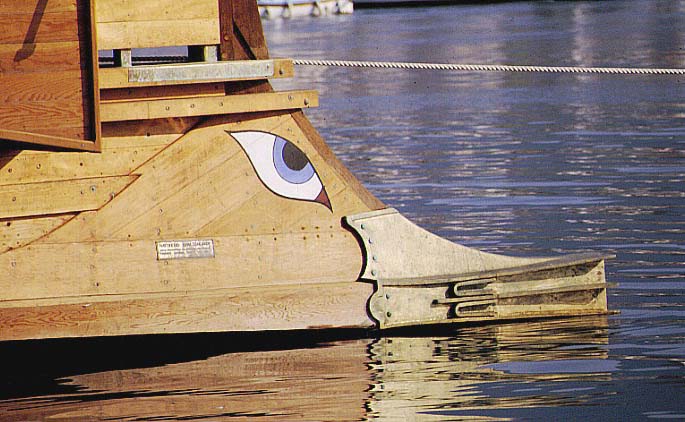
A boat in a Greek tragedy would be a trireme
three ranks of oars
one above the next above the next
a beak for a prow
better to ram, to pierce
the enemy boat.

The dogs, locked inside all day
burst out of doors in frenzied relief
like the children denied playgrounds
the workers denied work.

Meanwhile I walked up Soquel
jaywalked across Ocean
climbed the Broadway hill
to watch the hybrid rose — orange, yellow, & pink —
bloom careless & sprawling
above the chainlink fence.

Anger is sullen, is pouting
is dismay at the world refusing to cooperate
is armies of men with guns
is war, is death
is a 19-year-old killing his life
with killing — ablaze in a boat.

My grandchild studied my knee to find marks
where the ladybug might have bitten.
In the shop a woman 
held a paper towel for the slug 
to ooze up & onto —
carried it outdoors.

I didn’t want to come here today.
I wanted to stew in anger caused by too long fear.

Yet the sun shines, the bus runs.
I could sit @ the Scotts Valley Peet's
knowing we would read
we would write
fast words on slow paper
we strangers & not quite friends.

Tuesday, April 16, 2013

16 apr 2013


I don't know what this is, do you?

Change

I hang by my feet to sleep
wrapped in wings
shoulder-to-shoulder companioned
at dusk
maelstrom unfurling
our night life swoops

like swallows
conferring
at one patch of sand in the San Lorenzo River
the whirl of ashes skyward
rows of soldiers below
neverending touch-&-gos

spangled mallards in three-duck formation
scan for landing
every pass a tighter curl
they lock on target, shallow glide
into splashes & skids
the water hardly disturbed

next to Ray on the plane
the woman suffers a heart attack
(it wasn’t something he said)
Afaa’s class in Boston takes on Mother Courage
someone is always standing
at ground zero

detonated transform
body to mist
body heat to warmer air
better to dissolve completely
than remain grievously injured
bystanders spattered

in south Florida
hunters waited for spring
to target rookeries — heron, ibis, egret —
they killed the nesting pairs
for feathered hats, not hate
their families so poor they fed on gull eggs

still, even now
people ask
how can it happen here?
so placid with insular contemplation
innocence
does not equate to protection

the strong wind knocks down new-leafed branches
scatters orange petals
iris & agapanthus open in their place
the flowering maple
is not maple but Chinese lantern, Indian mallow
cousin to flannel flower

Abutilonflowering maple

helot conquered indigenous population of Spartan city-state; provided agricultural labor for Spartan landowners; only semi-free; largest population of Spartan city-state

particule — esp. in French, a preposition that precedes a family name

Richard Sieburth [courtesy of New Directions]

from Richard Sieburth’s Instigations: Ezra Pound and Remy de Gourmont:

Whereas the white heat of Voltairean wit is stoked by savage indignation, Gourmont’s cooler style instead affects the bemused disdain of the aristocrat who takes a prophylactic distance from the fray. Voltaire undertakes swift sorties against the enemy; Gourmont’s Symbolist tactic is rather one of strategic retreat: “If one happens to wish for a derailment, one must speak, one must write, one must smile, one must abstain — this is crucial — from all civic life . . . One must poison Authority, slowly, playfully . . . One must remain perfectly indifferent; irony in one’s eyes, one must make one’s way through the tangle of anti-liberal laws." Though the target of Gourmont’s irony may be the same as Voltaire’s (that is, authority in all its guises), his pose on the whole rather recalls the nineteenth-century dandy’s more apolitical mode of subversion. All dandies, Baudelaire had recognized,

share the same disposition to opposition and revolt; all are representative of what is finest in human pride, this need, all too rare today, to fight and destroy triviality. Among dandies, this is what gives birth to that haughty attitude which, even in its coldness, bespeaks a caste of provocateurs. Dandyism surfaces especially during transitional periods, when democracy is not yet all-powerful and the aristocracy is only partially tottering and debased. In the turmoil of these periods, a handful of men [sic] — disinherited, disgusted, idle, but with a wealth of native energy — can conceive the project of founding a new kind of aristocracy, one which will be all the more difficult to smash because based on the most precious and most indestructible of abilities, on those heavenly gifts which neither work nor money can confer. Dandyism is the last burst of heroism in decadences.

Pound . . . agreed with Baudelaire that “the aristocracy of entail and of title has decayed, the aristocracy of commerce is decaying, the aristocracy of the arts is ready again for service.”:

There is no truce between art and the vulgo. There is a constant and irrefutable alliance between art and the oppressed. The people have never objected to obscurity in ballads. The bitterest and most poignant songs have often been written in cypher — of necessity.

Saturday, March 16, 2013

16 mar 2013

[courtesy of Latuff Cartoons]


Overlooked by the New Pope, or
Torture in Argentina

young woman
young man
take off all your clothes

accept these metal clips
on your nipples, vagina
testicles, penis

accept — my pleasure —
these electric shocks

young woman
open your mouth
for these hard cocks
suck & choke & swallow

young man
bend over
for these hard cocks
rammed up your asshole

young woman
open your thighs

for this snake to slither
up your vagina
coil into your uterus
birth back out

or was it a rat
that crawled?

young man
young woman

forgive me
I have forgotten
what else

Monday, December 24, 2012

foxes & weeds

US Senator Crapo arrested on DUI
Oh my God, he forgot he was a Mormon

Gallup reports the 8 out of 10 countries with most positive emotions:
Panama, Paraguay, El Salvador, Venezuela, Trinidad & Tobago, Guatemala, Ecuador, Costa Rica
is it the weather/drug combo?

clove oil at my wrists, a drop of DigestZen oil in my water  — anise!

head out to weed east & south
particularly berries, but a few weeds east of the acequia distract me
as did more around the willow
my body decides to work around the house, what I see most
so I prune & dig mint, deadhead coreopsis —
the dead stems & flowers ruin the garden
dead & dying matter underneath the plants
likely coreopsis can’t stay beautiful in constant dry heat

a blog of what passes through me
everything I would have fb’d or journaled
today titled Way

why not buy a car in Paraguay
sell our limited-to-driving-in-Argentina car
drive anywhere we want
every one of South America’s thirteen countries
Argentina, Bolivia, Brazil, Chile,
Colombia, Ecuador, French Guiana, Guyana
Paraguay, Peru, Suriname, Uruguay, & Venezuela

it can’t be that simple
Argentina will have a law against it

Argentine political analyst Joaquin Morales Solá says:

the speech full of resentment and the policy of confrontation
so ingrained in the national and popular government
have erased any border between good and evil

the subsidies policy without any matching efforts in education or work
resentment from vandals against those who “have” something or very much
the property of somebody else is a right of those living in the margins

the prevailing social doctrine which says anyone can do whatever they wish . . .
because “the ‘have not’ are in their right to take from the ‘haves’

there is a judicial thinking, currently predominant,
which simply wants to abolish the Criminal Code

foxes here are in poor health
shortly after 14:00 on this hot afternoon
this fox drinks from the pond


wanders west


stops for a lick


before disappearing into the vineyard

suddenly a solution

first you see coreopsis


then you don’t


end of problem