Saturday, June 27, 2015

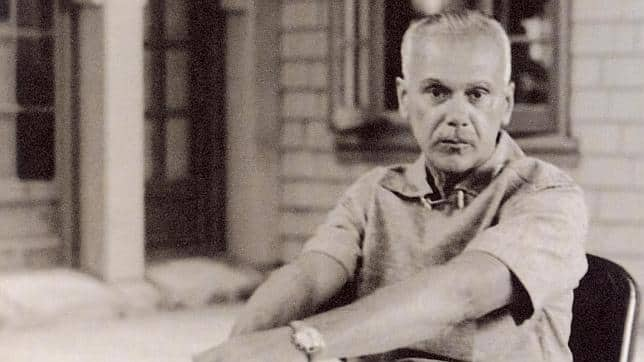
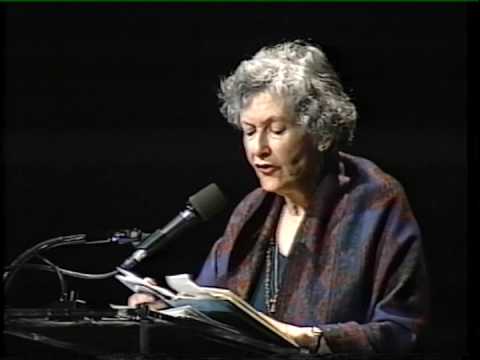
Denise Levertov

Denise Levertov [The Allen Ginsburg Project]


A Woman Alone

When she cannot be sure
which of two lovers it was with whom she felt
this or that moment of pleasure, of something fiery
streaking from head to heels, the way the white
flame of a cascade streaks a mountainside
seen from a car across a valley, the car
changing gear, skirting a precipice,
climbing . . .
When she can sit or walk for hours after a movie
talking earnestly and with bursts of laughter
with friends, without worrying
that it's late, dinner at midnight, her time
spent without counting the change . . .
When half her bed is covered with books
and no one is kept awake by the reading light
and she disconnects the phone, to sleep till noon . . . Then
self-pity dries up, a joy
untainted by guilt lifts her.
She has fears, but not about loneliness;
fears about how to deal with the aging
of her body –– how to deal
with photographs and the mirror. She feels
so much younger and more beautiful
than she looks. At her happiest
–– or even in the midst of
some less than joyful hour, sweating
patiently through a heatwave in the city
or hearing the sparrows at daybreak, dully gray,
toneless, the sound of fatigue ––
a kind of sober euphoria makes her believe
in her future as an old woman, a wanderer
seamed and brown,
little luxuries of the middle of life all gone,
watching cities and rivers, people and mountains,
without being watched; not grim nor sad,
an old winedrinking woman, who knows
the old roads, grass-grown, and laughs to herself . . . She knows it can't be:
that's Mrs. Doasyouwouldbedoneby from The Water Babies,
no one can walk the world any more,
a world of fumes and decibels.
But she thinks maybe
she could get to be tough and wise, some way,
anyway. Now at least
she is past the time of mourning,
now she can say without shame or deceit,
O blessed Solitude.

Friday, June 19, 2015

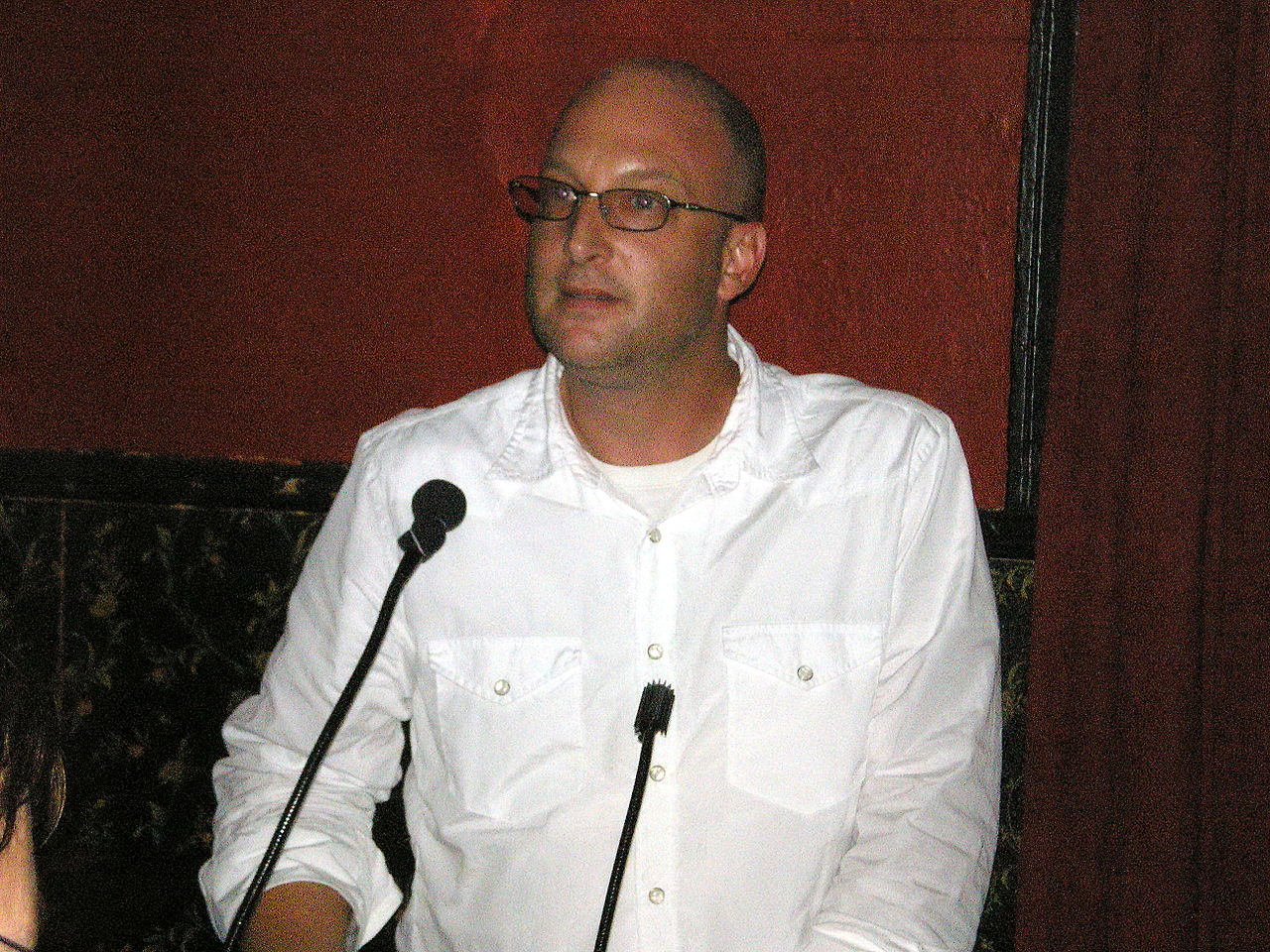
Barry Lopez

Barry Lopez [Willamette Week]

from Barry Lopez's Winter Count:

"I have no idea," he had told her once, "why I long to be in that landscape, but I do. Maybe it is only being alone, infinitesimal. I can look at a whimbrel, the long-legged, hesitating movement, as if the bird were waiting for thoughts to enter its mind, and understand why in that vast tundra it chooses as it does precisely one lonely place to sit."

Thursday, June 18, 2015

Luis Cernuda

Luis Cernuda [ABCdesavilla]

from Luis Cernuda's Written in Water: The Prose Poems, translated by Stephen Kessler:

Home

You've always had the desire for a home, your home, to envelope you in a friendly atmosphere for work and for doing nothing. But at first you didn't know (because you would learn it later, after living among strangers) that behind your desire, and blended with it, was another: that of a refuge with the friendship of your things. Everything else would wait outside, but inside would be you and what was yours.

One day, when you'd already begun to wander the world, dreaming of your home but without one, an unexpected event at last presented you with the chance to have one. And you began to set it up around you, simple, comfortable, full of light: table, books, lamp — an atmosphere filled with the scent of the season's flowers.

But it was too easy, and your life too unsettled, to last very long. One day, another day, it disappeared as unexpectedly as it had come. And you went on wandering across so many lands, some that you hadn't even wanted to know. How many plans for a home you've had since then, nearly realized another time only to be lost again later.

Just four walls, a space as cozy as a ship's cabin, but yours and full of what's yours, even as you know its shelter could be transitory; light and silent and solitary, without the presence and the bothersome noise of those strangers with whom it's so often been your fate to share your living arrangements; tall, with its windows open to the sky and the clouds above the crowns of some trees.

But that's a dream you've abandoned now as impossible, even though for others it's a reality you can't aspire to. Your existence is too poor and always changing — you tell yourself, as you write these lines standing up, because you don't even have a table; your books (the ones you've kept) piled in a corner, like your papers. In the end, you don't have much time left, and who knows if it isn't better to live like this, stripped of possessions, perpetually ready for departure.

Saturday, June 13, 2015

C A Conrad

C A Conrad [M/ELT]

from C A Conrad's Ecodeviance:

Cormorant Stagecraft
for Caitlin Lacourse Ryan & Kepler-22B

             Venturing into the sun to smoke
             I am proof of nature and all its declarations.
                           — Ariana Reines

Kitten is my principal spirit animal, a totem to conquer my various forgivable, discordant planes of constriction. But it is the cormorant I surrender to for my most morbid of human needs. A cormorant DIVES into subconscious water-worlds to resurface somewhere new, and agitates my soul into happiness. When I was a boy I yearned for webbed fingers and toes, and was grateful to Benjamin Franklin for inventing swim flippers. When I was telling Ryan Eckes about this new (Soma)tic ritual he said, "That's what I try to do with every poem, I try not to drown."

What animal will you require yourself to meet for this exercise? I wore nylon stockings on my hands, then DOVE into the morning ocean off Virginia Beach, American fighter jets howling across the coastal trails, deafening the gulls, frightening the dolphins, and me. Eggs in the sand, nest in the dunes, a wind where all instruction flattens my eager crest. Love in a cormorant call compels a vibratory trance throughout a feral heart, lungs, liver.

Draw eight pictures of your spirit animal in different phases of your enactment of their lives. On the back of each write a message. Write a bit of confession from the bird, hippo, or unicorn you choose to be. Create an e-mail account for this exercise to include at the end of the message. Leave the pictures on the subway, in the bathroom at a museum, or the coffee shop counter. Anyone who writes you must receive your animal's reply. Your animal correspondence is YOUR TRUE correspondence! All your notes from the exercise become the poem.

Sunday, June 7, 2015

Anaïs Nin

Anaïs Nin [Monique's Passions]

Through the Streets of My Own Labyrinth
by Anaïs Nin

Landing at Cadiz I saw the same meager palm trees I had carefully observed when I was eleven years old and passing through on my way to America. I saw the Cathedral I had described minutely in my diary, I saw the city in which women do not go out very much; the city I said I would never live in because I liked independence. When I landed in Cadiz I found the palm trees, the Cathedral, but not the child I was.

The last vestiges of my past were lost in the ancient city of Fez, which was so much like my own life, with its tortuous streets, its silences, secrecies, its labyrinths and its covered faces.

In the city of Fez I became aware that the little demon which devoured me for twenty years, the little demon which I fought for twenty years, had ceased eating me.

I was at peace walking through the streets of Fez, absorbed by a world outside of myself, by a past which was no longer my past, by sicknesses one could touch and name and see, visible sickness, leprosy and syphilis.

I walked with the Arabs, chanted and prayed with them to a god who ordained acceptance. I shared their resignation.

With them I crouched in stillness, lost myself in streets without issues — the streets of my desires; forgot where I was going, to sit by the mud-colored walls listening to the copper workers hammering copper trays, watching the dyers dipping their silk in rainbow-colored pails.

Through the streets of my labyrinth I walked in peace at last, strength and weakness welded in the Arab eyes by the dream. The blunders I made lay like the refuse on the doorsteps and nourished the flies. The places I did not reach were forgotten because the Arab on his donkey or on naked feet walked forever between the walls of Fez as I shall walk forever between the walls and fortresses of my diary. The failures were inscriptions on the walls, half effaced by time, and with the Arabs I let the ashes fall, the old flesh die, the inscriptions crumble. I let the cypresses alone watch the dead in their tombs. I let the madnesses be tied in chains as they tie their madmen. I walk with them to the cemetery not to weep, but carrying colored rugs and bird cages for a feast of talk with friends — so little does death matter, or disease, or tomorrow. The Arabs dream, crouching, fall asleep chanting, beg, pray, with never a cry of rebellion; night watchmen, sleeping on the doorsteps in their soiled burnooses; little donkeys bleeding from maltreatment. Pain is nothing, pain is nothing here; in mud and hunger, everything is dreamed. The little donkey — my diary burdened with my past — with small faltering steps is walking to the market . . .

Saturday, June 6, 2015

Michel Delville


from Michel Delville's The American Prose Poem: Poetic Form and the Boundaries of Genre:

Jakobson describes language as oscillating between the two antipodal processes of selection and combination — the former is described as metaphoric, the latter as metonymic. Jakobson clearly considers metaphor and metonymy as two complementary aspects of any discourse, as speech implies “a selection of certain linguistic entities and their combination into linguistic units of a higher degree of complexity.” Any linguistic utterance thus develops along both the axis of similarity (the substitution of one word or idea for another) and that of contiguity (the sequential arrangement of the signifying chain). “Under the influence of a cultural pattern, personality, and verbal style,” however, “preference is given to one of the two processes over the other.” . . . The metaphoric conception underlying Surrealism, for example, is to be distinguished from the metonymic orientation of Cubism, “where the object is transformed into a set of synecdoches.” Cinema, unlike drama, is basically metonymic, but some filmmakers nevertheless make use of metaphoric techniques, such as Charlie Chaplin’s “lap dissolves,” which Jakobson describes as “filmic similes.”

. . . While prose is essentially forwarded by contiguity, “the principle of similarity underlies poetry; the metrical parallelism of lines or the phonic equivalence of rhyming words prompts the question of semantic similarity and contrast.” . . . Jakobson defines the poetic or “aesthetic” function of language more specifically as the superimposition of similarity upon contiguity: “The poetic function projects the principle of equivalence from the axis of selection into the axis of combination.” Poetic language is therefore neither antimetonymic nor exclusively metaphorical. Instead, it seeks to transpose the substitutional dynamics of metaphoric language onto the metonymic speech act.

Friday, June 5, 2015

Richard Siken

Richard Siken [David Shankbone]

from Richard Siken's War of the Foxes:

Detail of the Woods

I looked at all the trees and didn’t know what to do.

A box made out of leaves.

What else was in the woods? A heart, closing. Nevertheless.

Everyone needs a place. It shouldn’t be inside of someone else.

I kept my mind on the moon. Cold moon, long nights moon.

From the landscape: a sense of scale.

From the dead: a sense of scale.

I turned my back on the story. A sense of superiority.

Everything casts a shadow.

Your body told me in a dream it’s never been afraid of anything.


Detail of the Hayfield

I followed myself for a long while, deep into the field.
Two heads full of garbage.

Our scope was larger than I realized,
which only made me that much more responsible.

Yellow, yellow, gold, and ocher.
We stopped. We held the field. We stood very still.

Everyone needs a place.

You need it for the moment you need it, then you bless it—
thank you soup, thank you flashlight —

and move on. Who does this? No one.

Wednesday, June 3, 2015

Alice Notley

    Toys and rose               The zoo body zigzags
I think fish too
                                        but I'm a polite
social being, I'm a Ladle Lady or purple
and blue I write green letters and gold
editorials for the Krystal Oxygen Company
I have one hip as far as I can see, that
I see as I write say
                                         white tee-shirts
                                            upsidedown
                                         turn em around
                                           & put them on
                                             your muscles
                                                my angels

                      or

                                   a semi-colon
                                      is blue window
                                           to me
is that a haiku? I fly over San Diego in some one or
another real despair and ask you to comfort me. You
more or less do, you aren't even here
            my best me my worldly me
            my taste of spring my continuance my
            comfort will you comfort me?
I offer you my heart over Tucson
                                                I can't use it
               take it to comfort me
                                                             free
                  me be it take it take it to
                  be it
which apparently you don't or take you help provide
me it I think, that
happens among true people, that poem I was writing
no good poem
                                    but Moment framed the Pleiades
The garnets ring more beautiful the longer you
                                             are waiting for me in them,
                                             where Deity makes me friendly there.

But who put on all the tee-shirts in Hunter's
Point? Well we're all good boys my son said so.
A semi-colon is a semi-precious garnet cluster
telegram; what we love are such depths between all
the messages. Pass the salt; Ladies of the Tang,
bubble of night; this book about Harry Truman is wonderful.

I see the Gulf Moon Rising every night. I'm familiar
with the zonked starfish. I've the sheen on under
the fire-escape railing all streetlight-lit. The
hollow suddenly appeared to enlarge and fill with a
bright light. Wild with the taste of wine it does not
remember the despair of an hour ago, which was true
that is of a true woman. She was somehow hating her
position on the round earth in the dusky sky on a
harsh Sunday. On the ground forgotten flowerlike
firmaments. She addressed in uneloquent hatred
SMUG LIFE
                          the one who soothes one's foolishness the
Great Face Construct who loves you for your kinks child
anyway, the Guru God:

              Oh I will come back a knockout tomorrow
                      Useless to you!
                                        You're not it you smug face
               I'm not doing your yoga not wearing
               Your moondrops using your cream
               Rinse letting you fuck me Exquisite
               Like I was one of the Ones With Brains Too!
               Intelligence in panties with peekaboo
                                                                    holes—

               No I'm coming back raw
               I'm getting drenched in the rain
               It's rain and it's wet I'm soaked I'm
               Chilled and I'm coughing the air's raw
               To my throat, which is raw from
               Coughing, coughing so strong
               Coughing and laughing
                         So strong from killing you!
Etc.
         
                  She didn't kill nothing.
                                                            & I don't get to share
no secrets with the stars. I make chow. I contemplate
semi-colons. I despair as a mother. I scream at that
kid I'm gonna crack open your big walnut if you don't
go to sleep. Theories of grace, that it implies no
surprise no shock. Ukrainians sudden on Sunday speaking
Ukrainian, the cross not Christian but Gracious
                            and when I want to cry or cough violently
it must diffuse back into my embassy; hard, that takes
hard. And if it weren't for you . . . not you smug life
face, but real you. Please play cribbage.
                                 Pass the salt.
                                 Think of a garnet-black cabbage, a
Ukrainian is selling it on 7th Street in honor of our
marriage. A Spanish fan opens in my abdomen
                           I have Spanish dancers in my stomach

         they're my arching striving in dance where it's black
red flowers darken to be huge pleasuring the
                severe, tried Angel who meets transition,
           transport, as abruptly as necessary
                                                  for everyone's are apt

Says the Unassuming Graceful
Whose down-hip-ness
Is that window
The dancers' sensuous flaw
That admits Spring,
Contingent upon our personality
Spring is for the worldly
                                                       just like the HaHa Room
                       Just like dearest rockbottom
                                                                  suddenly gone buoyant

                               
                                 To be black geese to be
                                 strenuous dancers
                                 is not to dignify a passion but to
                                 grip it.

                                        Not saints but always pupils
pupils dilated fully black in full achievement of
gut-feeling. Joy.

Thursday, May 14, 2015

Forget-Me-Not


Forget-Me-Not

Melody notices forget-me-not
because her mother loved it.
Pale knot, a name I’ve forgotten
until Melody brings it back.

Memory survives not in our brains
but in time, ever present, future, & past.

One midnight I wake next to a stranger,
lie cautious & listening, knowing 
the drug’s drone, the body’s ache.
Next shot, I collect T-shirt & jeans,
tiptoe between men on coil-shot couches.
Pan to a streetlight @ Otis & Pearl,
panhandle a dime for the phone.

A long time ago 
doesn’t mean it’s harder to remember.
What’s found on the stoop of an orphanage
marks the soul’s handoff
from one tired body to a fresh one,
or not tired, merely surprised.

The child asks, “What happens
at a funeral? What goes in the hole?”
& after, “I didn’t know about coffins.
I thought the dirt fell in the dead person’s eyes.”
“I was 30,” says Melody, “when my mother died.”

Because she doesn’t touch the flower
I touch it for her. 
The pattern on a turtle’s shell 
remembers every other, yet each is unique, 
a life shell grown inside a birth shell 
from memory all turtles share.

I don’t tell her
how carefully we close the body’s eyes.

Sunday, May 10, 2015

Youna Kwak

Youna Kwak [The Conversant]

Before the Avant-Garde
by Youna Kwak

O Mistress of stars, O Almanac of gazing,
What else can we smash?

                      A woman's leg
is no longer
deliciously curved to be licked or reckoned or a shape wanting remedy,
       an ever-after of delight and looking, and
deep kisses and not caring
who sees or thinks or how they might judge
our sexist-leg-loving.

The curve or form or arc of flesh
              no longer what it seemed, not the juicy summer pear it seemed, New York
       before the avant-garde, sidewalks broiling
              as if seams will fly open, crack — it would be cruel
not to want better, think we
know better,

Think we know everything. Intemperance, knowing
              everything. So much to smash.

To want to smash is not strange.

Even if
we remain bourgeois in the kitchen (where our mouths are open most and longest)
       and proletariat in the other rooms.

Later,
       before the avant-garde,
       we will go to a costume party — the air rippling
with the disturbance or presence of some strain,
saintly or smug.
We'll have freshly shucked oysters —
                                    you shuck them yourself, I'll slurp them, coquettish.
                     Your ex-morosing, carnivalesque, scooching in her pockets for
                  cab fare. Her silk pouch full of quarters rustling. Imagine,

                    if you had no use for quarters, laundry, parking, games, or sweets. Imagine if
                                  as you rose with a sudden flap of wing, red flashed underneath.

It is the moment before. It's not time to be morose,

morose in the kitchen, stay put. Yellow the color
                                   you wear to face disaster, like:

How the war is not won
how the little boys are drowning in the Rio Grande
their pants pockets full of mud
subway fare gone up
postal fare gone up
homicide gone up
baby on the stovetop, burned up

               you want to shout or smash something:

Conscripted army, bury your hatchet!
                     Everyone who has disappeared will rise. Every inconsequent
will someday be named.

               Even the rudest, the loudest, the poorest, the most deformed
                             will cry out with gladness
       and the satisfaction of the whole, they will
                             eat radishes, drink beer, laugh for love as if love were intact.

What else do you want to smash? Tell me, I'll smash it.

When the resistance comes you'll have to throw everything out once more again and

       Give up your armies,
your duties, your battles,
                       drink straight from the bottle,
then smash the bottle —

                       It is a story of obsession.
       It starts out political but it ends in romance.
Romance is expert everywhere there is danger.
       Romance flits its sniper's eye, pretending
not to see you, and it does.
       Whether it fixes you in metal crosshairs,
whether
your skin is merely light but opaque.
                                                          Merely a layer. Not
       an ebony fly in the water making black swirl.

Don't waste our last moment!
              — before the dense slaughter of kindness,
       tender pricked probe of a baby's eyes gleaming,
              widows and orphans, bark stink of vanilla, constellar sorrow
              like a sky umbrella, breathing distilled to dry blue hexagons, and the air
       then porous and immense and misty letters spelling out our names
                      then other words then god knows what else we could not read it.

In the moment after shall we remember
                                           thick rays of heat jolting off the pavement all summer.
How it felt
       to show up at a gallery dolled up, all your friends dolled up, all your friends
               wearing fuchsia lipstick melting in drowsy blots. Everyone everywhere
                                     patting, blotting, refreshing, putting on lipstick.
                             Foreheads and noses pooled to an obsequious lather.
                                           When it comes I will never

       reproach you, you poached egg of kindness, my Labrador.
                                                                                              Afterwards, there will be no pets.

       Even your love for me, which is well-preserved and historical,
             in the careening violet-edged ring-ding of the moment
       when you contemplate your disruptive possibilities —
                                                                                             will chime suddenly, then
extinguish,
       like hundreds of telephones left
in a room without people.

Friday, May 1, 2015

Tony Hoagland

Tony Hoagland [High Volumes]
Special Problems in Vocabulary
by Tony Hoagland

There is no single particular noun
for the way a friendship,
stretched over time, grows thin,
then one day snaps with a popping sound.

No verb for accidentally
breaking a thing
while trying to get it open
— a marriage, for example.

No idiomatic phrase for losing a book
in the middle of reading it,
and therefore
never learning the end.

There is no expression — in English, at least
— for avoiding the sight
of your own body in the mirror,
for disliking the touch

of the afternoon sun,
for walking into the long flatland
that stretches out before you
after your adventures are done.

No adjective for gradually speaking less, and less,
because you have stopped being able
to say the one thing that would
break your life loose from its grip.

Certainly no name that one could imagine
for the aspen tree outside,
its spade-shaped leaves

spinning on their stems,
working themselves into
a pale-green, vegetable blur.

No word for waking up one morning
and looking around,
because the mysterious spirit

which drives all things
seems to have returned,
and is on your side again.