Wednesday, June 3, 2015

Alice Notley

    Toys and rose               The zoo body zigzags
I think fish too
                                        but I'm a polite
social being, I'm a Ladle Lady or purple
and blue I write green letters and gold
editorials for the Krystal Oxygen Company
I have one hip as far as I can see, that
I see as I write say
                                         white tee-shirts
                                            upsidedown
                                         turn em around
                                           & put them on
                                             your muscles
                                                my angels

                      or

                                   a semi-colon
                                      is blue window
                                           to me
is that a haiku? I fly over San Diego in some one or
another real despair and ask you to comfort me. You
more or less do, you aren't even here
            my best me my worldly me
            my taste of spring my continuance my
            comfort will you comfort me?
I offer you my heart over Tucson
                                                I can't use it
               take it to comfort me
                                                             free
                  me be it take it take it to
                  be it
which apparently you don't or take you help provide
me it I think, that
happens among true people, that poem I was writing
no good poem
                                    but Moment framed the Pleiades
The garnets ring more beautiful the longer you
                                             are waiting for me in them,
                                             where Deity makes me friendly there.

But who put on all the tee-shirts in Hunter's
Point? Well we're all good boys my son said so.
A semi-colon is a semi-precious garnet cluster
telegram; what we love are such depths between all
the messages. Pass the salt; Ladies of the Tang,
bubble of night; this book about Harry Truman is wonderful.

I see the Gulf Moon Rising every night. I'm familiar
with the zonked starfish. I've the sheen on under
the fire-escape railing all streetlight-lit. The
hollow suddenly appeared to enlarge and fill with a
bright light. Wild with the taste of wine it does not
remember the despair of an hour ago, which was true
that is of a true woman. She was somehow hating her
position on the round earth in the dusky sky on a
harsh Sunday. On the ground forgotten flowerlike
firmaments. She addressed in uneloquent hatred
SMUG LIFE
                          the one who soothes one's foolishness the
Great Face Construct who loves you for your kinks child
anyway, the Guru God:

              Oh I will come back a knockout tomorrow
                      Useless to you!
                                        You're not it you smug face
               I'm not doing your yoga not wearing
               Your moondrops using your cream
               Rinse letting you fuck me Exquisite
               Like I was one of the Ones With Brains Too!
               Intelligence in panties with peekaboo
                                                                    holes—

               No I'm coming back raw
               I'm getting drenched in the rain
               It's rain and it's wet I'm soaked I'm
               Chilled and I'm coughing the air's raw
               To my throat, which is raw from
               Coughing, coughing so strong
               Coughing and laughing
                         So strong from killing you!
Etc.
         
                  She didn't kill nothing.
                                                            & I don't get to share
no secrets with the stars. I make chow. I contemplate
semi-colons. I despair as a mother. I scream at that
kid I'm gonna crack open your big walnut if you don't
go to sleep. Theories of grace, that it implies no
surprise no shock. Ukrainians sudden on Sunday speaking
Ukrainian, the cross not Christian but Gracious
                            and when I want to cry or cough violently
it must diffuse back into my embassy; hard, that takes
hard. And if it weren't for you . . . not you smug life
face, but real you. Please play cribbage.
                                 Pass the salt.
                                 Think of a garnet-black cabbage, a
Ukrainian is selling it on 7th Street in honor of our
marriage. A Spanish fan opens in my abdomen
                           I have Spanish dancers in my stomach

         they're my arching striving in dance where it's black
red flowers darken to be huge pleasuring the
                severe, tried Angel who meets transition,
           transport, as abruptly as necessary
                                                  for everyone's are apt

Says the Unassuming Graceful
Whose down-hip-ness
Is that window
The dancers' sensuous flaw
That admits Spring,
Contingent upon our personality
Spring is for the worldly
                                                       just like the HaHa Room
                       Just like dearest rockbottom
                                                                  suddenly gone buoyant

                               
                                 To be black geese to be
                                 strenuous dancers
                                 is not to dignify a passion but to
                                 grip it.

                                        Not saints but always pupils
pupils dilated fully black in full achievement of
gut-feeling. Joy.

Thursday, May 14, 2015

Forget-Me-Not


Forget-Me-Not

Melody notices forget-me-not
because her mother loved it.
Pale knot, a name I’ve forgotten
until Melody brings it back.

Memory survives not in our brains
but in time, ever present, future, & past.

One midnight I wake next to a stranger,
lie cautious & listening, knowing 
the drug’s drone, the body’s ache.
Next shot, I collect T-shirt & jeans,
tiptoe between men on coil-shot couches.
Pan to a streetlight @ Otis & Pearl,
panhandle a dime for the phone.

A long time ago 
doesn’t mean it’s harder to remember.
What’s found on the stoop of an orphanage
marks the soul’s handoff
from one tired body to a fresh one,
or not tired, merely surprised.

The child asks, “What happens
at a funeral? What goes in the hole?”
& after, “I didn’t know about coffins.
I thought the dirt fell in the dead person’s eyes.”
“I was 30,” says Melody, “when my mother died.”

Because she doesn’t touch the flower
I touch it for her. 
The pattern on a turtle’s shell 
remembers every other, yet each is unique, 
a life shell grown inside a birth shell 
from memory all turtles share.

I don’t tell her
how carefully we close the body’s eyes.

Sunday, May 10, 2015

Youna Kwak

Youna Kwak [The Conversant]

Before the Avant-Garde
by Youna Kwak

O Mistress of stars, O Almanac of gazing,
What else can we smash?

                      A woman's leg
is no longer
deliciously curved to be licked or reckoned or a shape wanting remedy,
       an ever-after of delight and looking, and
deep kisses and not caring
who sees or thinks or how they might judge
our sexist-leg-loving.

The curve or form or arc of flesh
              no longer what it seemed, not the juicy summer pear it seemed, New York
       before the avant-garde, sidewalks broiling
              as if seams will fly open, crack — it would be cruel
not to want better, think we
know better,

Think we know everything. Intemperance, knowing
              everything. So much to smash.

To want to smash is not strange.

Even if
we remain bourgeois in the kitchen (where our mouths are open most and longest)
       and proletariat in the other rooms.

Later,
       before the avant-garde,
       we will go to a costume party — the air rippling
with the disturbance or presence of some strain,
saintly or smug.
We'll have freshly shucked oysters —
                                    you shuck them yourself, I'll slurp them, coquettish.
                     Your ex-morosing, carnivalesque, scooching in her pockets for
                  cab fare. Her silk pouch full of quarters rustling. Imagine,

                    if you had no use for quarters, laundry, parking, games, or sweets. Imagine if
                                  as you rose with a sudden flap of wing, red flashed underneath.

It is the moment before. It's not time to be morose,

morose in the kitchen, stay put. Yellow the color
                                   you wear to face disaster, like:

How the war is not won
how the little boys are drowning in the Rio Grande
their pants pockets full of mud
subway fare gone up
postal fare gone up
homicide gone up
baby on the stovetop, burned up

               you want to shout or smash something:

Conscripted army, bury your hatchet!
                     Everyone who has disappeared will rise. Every inconsequent
will someday be named.

               Even the rudest, the loudest, the poorest, the most deformed
                             will cry out with gladness
       and the satisfaction of the whole, they will
                             eat radishes, drink beer, laugh for love as if love were intact.

What else do you want to smash? Tell me, I'll smash it.

When the resistance comes you'll have to throw everything out once more again and

       Give up your armies,
your duties, your battles,
                       drink straight from the bottle,
then smash the bottle —

                       It is a story of obsession.
       It starts out political but it ends in romance.
Romance is expert everywhere there is danger.
       Romance flits its sniper's eye, pretending
not to see you, and it does.
       Whether it fixes you in metal crosshairs,
whether
your skin is merely light but opaque.
                                                          Merely a layer. Not
       an ebony fly in the water making black swirl.

Don't waste our last moment!
              — before the dense slaughter of kindness,
       tender pricked probe of a baby's eyes gleaming,
              widows and orphans, bark stink of vanilla, constellar sorrow
              like a sky umbrella, breathing distilled to dry blue hexagons, and the air
       then porous and immense and misty letters spelling out our names
                      then other words then god knows what else we could not read it.

In the moment after shall we remember
                                           thick rays of heat jolting off the pavement all summer.
How it felt
       to show up at a gallery dolled up, all your friends dolled up, all your friends
               wearing fuchsia lipstick melting in drowsy blots. Everyone everywhere
                                     patting, blotting, refreshing, putting on lipstick.
                             Foreheads and noses pooled to an obsequious lather.
                                           When it comes I will never

       reproach you, you poached egg of kindness, my Labrador.
                                                                                              Afterwards, there will be no pets.

       Even your love for me, which is well-preserved and historical,
             in the careening violet-edged ring-ding of the moment
       when you contemplate your disruptive possibilities —
                                                                                             will chime suddenly, then
extinguish,
       like hundreds of telephones left
in a room without people.

Friday, May 1, 2015

Tony Hoagland

Tony Hoagland [High Volumes]
Special Problems in Vocabulary
by Tony Hoagland

There is no single particular noun
for the way a friendship,
stretched over time, grows thin,
then one day snaps with a popping sound.

No verb for accidentally
breaking a thing
while trying to get it open
— a marriage, for example.

No idiomatic phrase for losing a book
in the middle of reading it,
and therefore
never learning the end.

There is no expression — in English, at least
— for avoiding the sight
of your own body in the mirror,
for disliking the touch

of the afternoon sun,
for walking into the long flatland
that stretches out before you
after your adventures are done.

No adjective for gradually speaking less, and less,
because you have stopped being able
to say the one thing that would
break your life loose from its grip.

Certainly no name that one could imagine
for the aspen tree outside,
its spade-shaped leaves

spinning on their stems,
working themselves into
a pale-green, vegetable blur.

No word for waking up one morning
and looking around,
because the mysterious spirit

which drives all things
seems to have returned,
and is on your side again.

Sunday, April 19, 2015

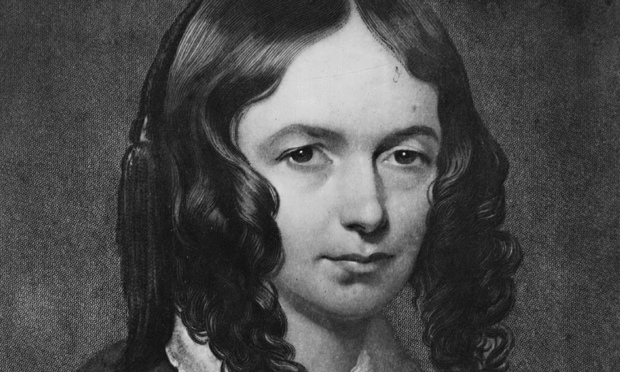
Elizabeth Barrett Browning

Elizabeth Barrett Browning [Hultong Getty]

To George Sand, A Recognition


True genius, but true women! dost deny
Thy woman’s nature with manly scorn,
And break away the gauds and armlets worn
By weaker women in captivity?
Ah, vain denial! that revolted cry
Is sobbed in by a woman’s voice forlorn:
Thy woman’s hair, my sister, all unshorn,
Floats back dishevelled strength in agony,
Disproving thy man’s name: and while before
The world thou burnest in a poet fire,
We see thy woman-heart beat evermore
Through the large flame. Beat purer, heart, and higher,
Till God unsex thee on the heavenly shore,
Where unincarnate spirits purely aspire.

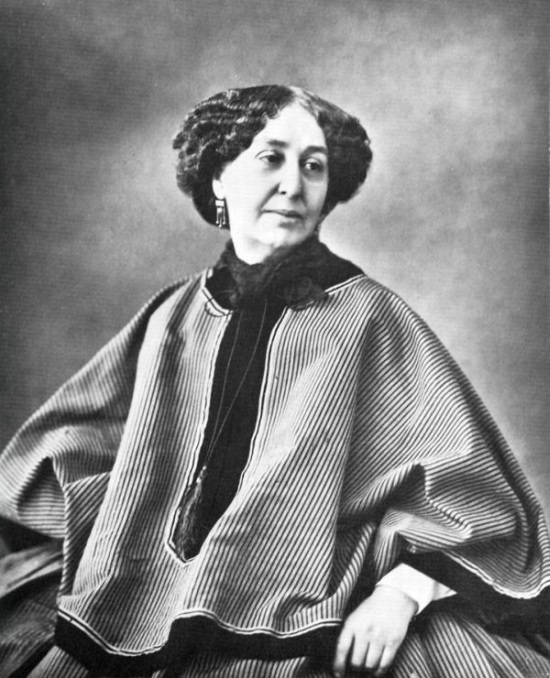
George Sand

Thursday, April 9, 2015

Gerald Stern

Gerald Stern [Poetry Foundation]


Alone
by Gerald Stern

I was alone and I could do what I wanted —
I couldn’t believe my luck — if I wanted to sleep
at ten in the morning I could sleep or two
in the afternoon, if that was my time, or wander
by car or foot delicately in the night
when everything was resting exhausted and stop to
eat in quiet, no humor at last, oh coffee,
coffee, I was sitting alone at a counter —
I was in a painting sort of — closeness
closer than love between me and the waitress,
and when I paid the bill more closeness, I walked
from window to window, once I walked the length
of Amsterdam Avenue, once I walked from Lake
Garda to Venice, a hundred miles, and Venice
south to Florence, through Bologna; I ate
mortadella cheap I washed in the fountains
I slept with the barking dogs and twice in my life
I woke up surrounded, once on the floor of a train station,
once on the floor of a bank. I left at five
or six in the morning; I put my keys in a bottle;
I wore two pair of socks and hid my money.

Grass and Water

The geese have their heaven and I have mine,
though both are made of grass and water and both
have sudden subtle bridges where the carved stone
changes color under the presumptive arches,
and it is microcosmic and symbolic
so I could be there lying under the stars,
if it is one of the hazy afternoons,
and even mistake the birdlime for the Milky Way
or one drop of water in the sunlight
for one of the late afternoons, though nothing I know
will save them even though their eggs are like steel,
even though their guards are wise; whereas I
still am struggling, I with the soft egg, I
with the infantile presidents. You should see me
explaining things to them, below the bridge
this side of the river, not for one good second
ridiculing them. I still am reading and thinking;
I still am comparing; and I am spending my time
like one or two others in understanding, that is
a type of heaven too, at least for me it is,
holding on to the stabbed uprooted sycamore.

Tuesday, April 7, 2015

Ode to Becoming Able


Ode to Becoming Able

Told
not 
to bend 
at the waist 
beyond 90º,
I cannot tie 
a shoe, clip a 
toenail, scratch 
a low itch
after hip 
replacement.
I dismay the cat —
my foreign smell,
clumsy motions.
With tools
a long 
shoehorn, 
a long-handled 
gripper, 
a plastic scoop
controlled 
by ropes —
I can pull on 
jeans,
pull up socks,
slide into 
Dansko clogs, 
slip out of 
the house 
at dawn
to climb 
the wooden
steps
to the well house,
the cat stepping, 
leaping,
beside me.
Quarter mile,
half mile, 
six weeks
before I bend 
cautiously,
clumsily tie
the red-suede 
shoes.
Soon enough,
limber from yoga,
from walking 
two dozen
miles 
each week,
I can’t tie laces 
due to
a rebuilt thumb.
The cat stands off, 
stares
& turns away.
I practice
minuscule
circular motions
— reach, press, hold —
the pain
in my hand
so much worse
than the hip
from four times
as many nerves.
Months
pass before
the cat sleeps
leaning
against me,
heavy weight, 
purrs
when I toss
sleepless.
Mornings
his paws knead
the blanket
— nails long, 
bowl empty —
prompt me
to remember
what
I used to do.

Friday, April 3, 2015

Elisa Albert


the other thing about Steve is the sense that because I'm a female he can't immediately classify, I set him more or less on edge. Call it low-grade misogyny. It's not extreme-porno misogyny, not I'm-gonna-rape-and-kill-you misogyny, just plain old run-of-the-mill semiconscious women-are-to-fuck-or-mother misogyny. Fear of the female. Menstrual cycle as mysterious sinister secret, et cetera. Women as doormats and/or commodities and/or hookers, the end. Intuition an absurdity. Life only and always about what we can touch/articulate/own. And me with my insistence on eye contact, my opinions! My candor! My always! Feeling! So! Much! Something about how these kinds of men would never dream of hanging out with a woman for fun, talking to a woman just because her perspective on life is inherently valuable. Not, at least, if he wasn't also hoping to fuck her.

Wednesday, April 1, 2015

Tom McCarthy

Tom McCarthy [The Guardian]

from Tom McCarthy's Satin Island:

11.6 You still haven't told me how you came to be in that airport, I said to Madison as we lay in bed one evening. There's lots of things I haven't told you, she replied. If people were to tell other people everything about themselves, we'd live in a dull world. If knowing everything about a person were the be-all and end-all of human interaction, she said, we'd just carry memory-sticks around and plug them into one another when we met. We could have little ports, slits on our sides, like extra mouths or ears or sex organs, and we'd slip these sticks in and upload, instead of talking or screwing or whatever. Would you like that, Mr. Anthropologist? No, I told her; I don't want to know everything about you. This was true; I hadn't asked her very much about herself at all — her family, her background, any of that stuff — not back in Budapest when we'd first met, and not since, either. Our liaison had been based throughout on minimum exchange of information. I don't want to know everything about you, I repeated. I just want to know what you were doing in Turin. I wasn't in Turin, she said again. Torino-Caselle, I replied, whatever. Why? she asked. I'm intrigued, I told her. What, professionally? she goaded me. That's right, I said: professionally. Well then you'll have to pay me, she said.

Tuesday, March 31, 2015

Bernadette Mayer

Bernadette Mayer [The Arbiter]

from Bernadette Mayer's A Bernadette Mayer Reader:

Essay

I guess it's too late to live on the farm
I guess it's too late to move to a farm
I guess it's too late to start farming
I guess it's too late to begin farming
I guess we'll never have a farm
I guess we're too old to do farming
I guess we couldn't afford to buy a farm anyway
I guess we're not suited to being farmers
I guess we'll never have a farm now
I guess farming is not in the cards now
I guess Lewis wouldn't make a good farmer
I guess I can't expect we'll ever have a farm now
I guess I have to give up all my dreams of being a farmer
I guess I'll never be a farmer now
We couldn't get a farm anyway though Allen Ginsburg got one late in life
Maybe someday I'll have a big garden
I guess farming is really out
Feeding the pigs and chickens, walking between miles of rose of crops
I guess farming is just too difficult
We'll never have a farm
Too much work and still to be poets
Who are the farmer poets
Was there ever a poet who had a self-sufficient farm
Flannery O'Connor raised peacocks
And Wendell Berry has a farm
Faulkner may have farmed a little
And Robert Frost had farmland
And someone tole me Samuel Beckett farmed
Very few poets are real farmers
If William Carlos Williams could be a doctor and Charlie Vermont too,
Why not a poet who is also a farmer
Of course there was Brook Farm
And Virgil raised bees
Perhaps some poets of the past were overseers of farmers
I guess poets tend to live more momentarily
Than life on a farm would allow
You could never leave the farm to give a reading
Or go to a lecture by Emerson in Concord
I don't want to be a farmer but my mother was right
I should never have tried to rise out of the proletariat
Unless I can convince myself as Satan argues with Eve
That we are among a proletariat of poets of all the classes
Each ill-paid and surviving on nothing
Or on as little as one needs to survive
Steadfast as any farmer and fixed as the stars
Tenants of a vision w rent out endlessly

Saturday, March 28, 2015

Ode to Firestarting


Ode to Firestarting

Even before
beginning 
I admire
sourdough 
starter risen 
through the night 
to frothy 
soup.
Torn shipping box
in hand
I open 
the stove door,
sweep
yesterday’s ash
flat
with sandwiched 
corrugation,
crinkle
brown paper,
toss in
a handful of
grocery receipts,
sprinkle 
of fir cones
crisscrossed
by mossy twigs,
two larger twigs
feathered
with serrate leaves,
a half-rotted 
redwood chunk,
thick curl 
of oak bark.
One match 
fires
two paper corners,
brittle leaves,
though minutes 
pass before flame
slithers
through the bark tunnel,
leaps
to iron 
firebox roof,
my signal
to layer on
a starter log
without tumbling
the still
fragile pyre.
I brew & drink
Earl Grey,
breakfast
on egg & bacon,
ready myself
to measure
water, flour, & salt,
to kneel
& knead
the morning bread.